Tuesday, March 17, 2015

The Truth About Mascara

I can't walk out of the house without mascara on - Period.  But given that I'm a safe cosmetic junky, can I really say that mascara is okay to use?  As with most cosmetics, it's a complicated answer.  Mascara can contain, as with any cosmetic, most pretty harsh chemicals.  Some brands carry nasty stuff like parabens and retinyl acetate.  These chemicals can cause developmental and reproductive toxicity, ecotoxicology, endocrine disruption, allergies, immunotoxicity, biochemical changes at the cellular level, AND cancer.  Not good.

If all of those chemicals and effects sound like a foreign language to you, check out my post on the "Dirty Dozen" chemicals found in cosmetics for more information and explanation by clicking here!
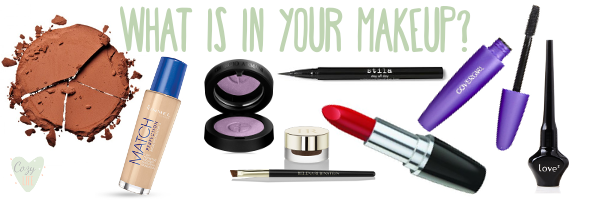
http://amcozy.blogspot.com/2015/01/chemicals-in-cosmetics-whats-in-your.html
But even with all of that, it doesn't mean that ALL mascara's are bad - like I said, I wear the stuff everyday.  It's important to do you research before buying a makeup product to be sure that you're buying something that not only works, but also doesn't put harmful chemicals on your body.

So what should you buy?

There's a number of great options out there, and I've found several at a low price-point for us "bargain shoppers."

Almay One Coat Nourishing Mascara, Lengthening: This formula is designed to lengthen lashes without clumps - it's a good option for those of us who like a more natural look.  Almay has included aloe and Vitamin B5 as well to help keep your lashes healthy.  This brand is also super cost effective and you can find this one at Target and WalMart below for less than $7 - not bad!

Physicians Formula Organic Wear 100% Natural Lash Boosting Mascara: "Organic" in the name of a product always makes me happy, and this one has great packaging... plus it actually works too!  This one is advertised to enhance both lash length and thickness - so it doesn't give you as much of a natural look as the other two options in this post, but it's even better for lashes with less artificial ingredients.  It's right in the middle on cost, around $10 at most retailers.

enhances the appearance of lash length, thickness and volume for dramatic lashes instantly and long-term - See more at: http://www.physiciansformula.com/en-us/productdetail/eyes/mascara/07561.html#sthash.ojB9aBWP.dpuf
enhances the appearance of lash length, thickness and volume for dramatic lashes instantly and long-term - See more at: http://www.physiciansformula.com/en-us/productdetail/eyes/mascara/07561.html#sthash.ojB9aBWP.dpu
bareMinerals Flawless Definition Waterproof Mascara:  If "natural" is what you want out of a mascara, this one will give it to you - no clumps, loads of length, no smudging, and a wand that is good for both upper and lower lashes.  I actually LOVE this one, though I don't use it often because of the price.  Like most bareMinerals products, it's expensive - this one checks in at $18.

http://topmommyblogs.com

Sunday, March 15, 2015

Family health & Air filters - Natural options?

I recently relocated to the Central Valley of California - it's been a lot of adjusting from the life of a coastal city with clean, moist air to a desert climate with dry, polluted air.  Because I have two small children (and a husband with severe allergies) I've been looking into ways to filter the air in our home to limit any potential allergy and respiratory issues.

One thing that we parents should keep in mind when considering our family's/children's respiratory health is the fact that indoor air is often up to 5 times more toxic than outdoor air - so if you live in an area with poor air quality, your indoor environment is probably not the safe haven you were hoping for.

What's in your air?

There's a lot of things you may not even know to worry about when it comes to indoor air quality - your family is breathing in A LOT of nasty stuff on a daily basis - Where you live, and even what you do for a living, can bring extra (or eliminate some) toxins.  Here's an idea of what you and your children are breathing:
  • Carbon dioxide (CO2)
  • Artificial Fragrances
  • Dust
  • Toxic vapors
  • Volatile organic compounds (VOCs)
  • Off-gas emissions from furniture, carpets, and paints
  • Dust mites
  • Microbial contaminants, fungi, molds, and bacteria
  • Ozone

How can you filter your air?

So now that we know our indoor air is likely more toxic than the outdoor air and that our indoor air is filled with gross stuff, what can we do?

The easiest and most obvious solution is to buy some form of air filtration device(s) - the problem with these is often the cost.  A system that will filter your entire home can cost thousands of dollars, depending on how "fancy" you want to go.  If that's too much, you can get free-standing air filters.  Generally, for a medium to large room, you're looking at an investment of over $100 for one of these - and you'll need one for every room.  When you consider all of the rooms in your home, you're looking at a pretty high price tag here as well.

However, the cost is often worth it if you're able to manage it - in addition to filtering toxins out of the air, these filters with assist with dust and large particles present in the air of your home.

Natural Alternatives

Please, DON'T stop with air filters - you have more options! ...and these may surprise you!

In the late 1980's, NASA published their Clean Air Study, which included a list of plants - yes, I said plants - that naturally filter and clean air.  These plants, depending on which you purchase, can filter many VOC's out of your indoor air - including benzene, formaldehyde, ammonia, toluene, xylene, and trichloroethene.

What's even better is that these plants can been extremely cost effective - and, as someone who lacks a "green thumb," I was glad to see that a few are also extremely hardy plants that can survive with little care.

In each room of your house, have several house plants stationed to assist in filtering your air - if you have a large home, you'll need to pick up a few extra for the added space they are filtering, but in general, 2-3 plants per room is a good rule of thumb.  Some of these plants can cost less than $10 each, so this is a massive savings over air filtering devices.

One thing that should be noted: These plants do not filter dust and large particles - that's what air filtration systems and devices are for.  I've opted to combine plant based filtering AND air filters in my home to clean as much as possible.

What plants should you buy?  

The variety is impressive - succulents, ferns and palms, flowers, etc.  Depending on your skill at keeping house plants alive (my success rate is pretty low, unfortunately), here's a list of recommendations - you can see the complete list from NASA's Clean Air Study here.

Beginners - No Green Thumb Required
Snake Plant & English Ivy are two hardy and easy to care for plants that will assist in filtering air.  Snake Plant is my strongest recommendation, as it filters benzene, formaldehyde, toluene, xylene, and trichloroethene all by itself - it's a superstar air filter.  English Ivy is a champ at filtering formaldehyde, which is likely the biggest toxin present in most homes.  Both of these plants require minimal light and don't need to be watered often.

Intermediate - Need a little TLC
The Peace Lily and Lady Palm are two highly effective air filters, but each requires a bit of work to maintain.  Peace Lily's excel at absorbing acetone and benzene - but they are toxic to animals, so they would need to be under close observation if you have pets.  Lady Palms are wonderful to have because they suck up ammonia, which can damage the respiratory system - but, they take a long time to grow, so you need to be patient with this one.
 

Advanced - Green Thumbs Only
Where most air filtering plants are ferns or vines, the Chrysanthemum and Moth Orchid have beautiful blooms that make them among the most beautiful house plants you could add to your collection.  Chrysanthemum's are also one of the most efficient air filters - they tackle benzene, formaldehyde, ammonia, toluene, xylene, and trichloroethene.  Moth Orchid's are also effective at absorbing toluene and xylene - both common in homes.  However, because of the floral nature of these plants, they do require a lot of sun and more consistent watering that most.  You'll need to tend to these plants frequently to keep them thriving.


http://topmommyblogs.com

Tuesday, March 10, 2015

Why do my cloth diapers stink?

One common problem that cloth parents face when newer to cloth diapering is a lingering "bad smell" that clings to diapers even after washing.  There are a number of potential causes to this problem, so let's do a little problem solving to see what might be happening to YOUR diapers.

Detergent and Water Temperature

Many cloth parents are driven to cloth diapering out of a desire to be more"natural" and limit harmful toxins or chemicals getting onto baby's skin.  As a result, a lot of parents go into the diaper washing process thinking that they shouldn't use a lot of detergent.  Detergents can leave residue on diapers, so by limiting the detergent, you're helping your diapers and your baby... right?

I completely disagree with this - It's extremely important to WASH your diapers.  This means that you need a cleaning agent to cleanse the fabric of baby's waste - if you don't use enough, the diapers will not be sufficiently clean.  Period.  It is important to know what a "safe" detergent is for your baby and the fabric of your diapers, so check out my post on cloth diaper detergents to guide you.

The temperature that you're using when washing your diapers is almost as important as the detergent - for natural fibers, HOT is best - in fact, the hotter, the better.  For synthetic fabrics, be sure to read manufacturer instructions when you buy your diapers - what's good for one fabric may not be good for another!
http://amcozy.blogspot.com/2015/01/diy-or-buy-cloth-diaper-detergent.html

Waiting Too Long To Wash

Just as important as actually washing your diapers, you also need to create a schedule for yourself on the frequency that your cloth diapers are actually making it into the washer.  It's not realistic to expect that you would wash diapers daily - that would drive me NUTS - but you also can't only wash them once a week either.

The reason that it's important to wash your diapers every 2-3 days is because the waste that your baby produces can begin to breakdown the fabric of your diapers and also cause the smell of baby's waste to sink into the fabric and stick around for a while.  By washing every 2 or 3 days, you are getting the waste off the fabric in time that it doesn't do any damage or leave a lingering smell behind.

Neglecting "Prep" for Wash

Another key step in the "de-stink" process for a cloth diaper is clearing it of the solid waste prior to putting it in your diaper pail.  Whether you choose to spray the waste away, use a wipe to remove it, or use liners to catch the waste for removal, be sure to do SOMETHING to remove it so that the majority of it isn't just sitting in your pail.  This is, firstly, gross - imagine the smell that would create!  Second, as I said before, the waste that your baby produces can begin to breakdown the fabric of your diapers and cause a lingering smell.

Obviously you can't get everything out and your baby's urine will be there regardless, but do your best to remove what you can quickly and then dump that bad-boy in your pail... and speaking of your pail - I am a believer in a pail that provides air flow to my diapers - my pail is a 13 gallon trash can with a swing-lid.  This means that my diapers have circulation of air moving in and out of the pail 24/7 - some moms don't want their bathrooms or nurseries to get smelly so they seal up their dirty diapers to avoid it.  In my experience, however, airflow helps to limit the smell both before AND after washes... but that's just me.

Build Up In Fabric

Sometimes, no matter what we do, "stink" begins to build up into our diapers - typically an ammonia-like smell.  This process usually takes a while and sometimes doesn't happen at all...  but if you're using diapers and noticing a weird smell that your normal wash routine isn't solving, you need to review your routine.  Sometimes it's tempting to "cut corners" to save time during the wash process - see if you're committing any of the above "diaper stink errors" and get back on track to avoid any further "stinkiness" and/or damage to your diapers.

In these cases, you will need to add an extra step to remove this build up of smell - One product that has become my friend is OxiClean.  {I am by NO means the first cloth parent to post about the wonders of OxiClean, so don't consider this my patented method, just friendly advice that worked for me!}  Soaking diapers in hot water overnight with a few scoops of OxiClean is like a miracle for bad smells.  Try the "Oxi-Soak" overnight and then wash your diapers (with an extra rinse beforehand) and you should see a huge improvement. 


http://topmommyblogs.com

Friday, March 6, 2015

The joys of relocation...

If you've been following me on Twitter or Instagram you'll know that this week my family embarked on a relocation journey, brought on by my new job in Central California... This adventure has been interesting to say the least.

Our new home is located in a city with a much slower pace with of life than what we were used to in Southern California - and by that, I mean everything is slower here... EVERYTHING.  Including internet and cable providers.  Which brings me to my point: the Cozy house has no internet... So the Cozy Life is off track for normal blog posts until next week.

Keep your fingers crossed that the rest of our time settling in goes smoothly- we could certainly use the good vibes!

Monday, March 2, 2015

Breast Cancer: Metastatic Monday

Today's post is unique - that's because today a viral campaign is taking place online to raise awareness for the deadliest form of breast cancer, Stage IV Metastatic Breast Cancer.  The campaign, #MetsMonday, is one that I wholeheartedly support, so I wanted to share some important information to all of the moms (and dads) out there about this frightening form of cancer.

Breast Cancer in America

For additional statistics and more information on breast cancer in the United States, please go to BreastCancer.Org.
  • About 1 in 8 U.S. women (about 12%) will develop invasive breast cancer over the course of her lifetime.  However, both women AND men can be diagnosed.
  • In 2014, an estimated 232,670 new cases of invasive breast cancer were expected to be diagnosed in women in the U.S., along with 62,570 new cases of non-invasive (in situ) breast cancer.
  • About 2,360 new cases of invasive breast cancer were expected to be diagnosed in men in 2014. A man’s lifetime risk of breast cancer is about 1 in 1,000.
  • About 40,000 women in the U.S. were expected to die in 2014 from breast cancer, though death rates have been decreasing since 1989 — with larger decreases in women under 50. These decreases are thought to be the result of treatment advances, earlier detection through screening, and increased awareness.
  • For women in the U.S., breast cancer death rates are higher than those for any other cancer, besides lung cancer.
  • Besides skin cancer, breast cancer is the most commonly diagnosed cancer among American women. Just under 30% of cancers in women are breast cancers.
  • Overall, African-American women are more likely to die of breast cancer.
  • In 2014, there were more than 2.8 million women with a history of breast cancer in the U.S. This includes women currently being treated and women who have finished treatment.
  • A woman’s risk of breast cancer approximately doubles if she has a first-degree relative (mother, sister, daughter) who has been diagnosed with breast cancer. About 15% of women who get breast cancer have a family member diagnosed with it.
  • About 5-10% of breast cancers can be linked to gene mutations (abnormal changes) inherited from one’s mother or father. Mutations of the BRCA1 and BRCA2 genes are the most common. 
  • Women with a BRCA1 mutation have a 55-65% risk of developing breast cancer before age 70, and often at a younger age that it typically develops. 
  • For women with a BRCA2 mutation, this risk is 45%. An increased ovarian cancer risk is also associated with these genetic mutations. 
  • In men, BRCA2 mutations are associated with a lifetime breast cancer risk of about 6%; BRCA1 mutations are a less frequent cause of breast cancer in men.
  • About 85% of breast cancers occur in women who have no family history of breast cancer. These occur due to genetic mutations that happen as a result of the aging process and life in general, rather than inherited mutations.
  • The most significant risk factors for breast cancer are gender (being a woman) and age (growing older).

http://topmommyblogs.com