Showing posts with label makeup. Show all posts

Tuesday, March 17, 2015

The Truth About Mascara

I can't walk out of the house without mascara on - Period.  But given that I'm a safe cosmetic junky, can I really say that mascara is okay to use?  As with most cosmetics, it's a complicated answer.  Mascara can contain, as with any cosmetic, most pretty harsh chemicals.  Some brands carry nasty stuff like parabens and retinyl acetate.  These chemicals can cause developmental and reproductive toxicity, ecotoxicology, endocrine disruption, allergies, immunotoxicity, biochemical changes at the cellular level, AND cancer.  Not good.

If all of those chemicals and effects sound like a foreign language to you, check out my post on the "Dirty Dozen" chemicals found in cosmetics for more information and explanation by clicking here!
http://amcozy.blogspot.com/2015/01/chemicals-in-cosmetics-whats-in-your.html
But even with all of that, it doesn't mean that ALL mascara's are bad - like I said, I wear the stuff everyday.  It's important to do you research before buying a makeup product to be sure that you're buying something that not only works, but also doesn't put harmful chemicals on your body.

So what should you buy?

There's a number of great options out there, and I've found several at a low price-point for us "bargain shoppers."

Almay One Coat Nourishing Mascara, Lengthening: This formula is designed to lengthen lashes without clumps - it's a good option for those of us who like a more natural look.  Almay has included aloe and Vitamin B5 as well to help keep your lashes healthy.  This brand is also super cost effective and you can find this one at Target and WalMart below for less than $7 - not bad!

Physicians Formula Organic Wear 100% Natural Lash Boosting Mascara: "Organic" in the name of a product always makes me happy, and this one has great packaging... plus it actually works too!  This one is advertised to enhance both lash length and thickness - so it doesn't give you as much of a natural look as the other two options in this post, but it's even better for lashes with less artificial ingredients.  It's right in the middle on cost, around $10 at most retailers.

enhances the appearance of lash length, thickness and volume for dramatic lashes instantly and long-term - See more at: http://www.physiciansformula.com/en-us/productdetail/eyes/mascara/07561.html#sthash.ojB9aBWP.dpuf
enhances the appearance of lash length, thickness and volume for dramatic lashes instantly and long-term - See more at: http://www.physiciansformula.com/en-us/productdetail/eyes/mascara/07561.html#sthash.ojB9aBWP.dpu
bareMinerals Flawless Definition Waterproof Mascara:  If "natural" is what you want out of a mascara, this one will give it to you - no clumps, loads of length, no smudging, and a wand that is good for both upper and lower lashes.  I actually LOVE this one, though I don't use it often because of the price.  Like most bareMinerals products, it's expensive - this one checks in at $18.

http://topmommyblogs.com

Thursday, February 5, 2015

Budget Beauty: e.l.f. Foundation & Powder

I am always out looking for a bargain, but when it comes to makeup, "cheap" - more often than not - usually equals "toxins."  It's an unfair reality that, generally, "safe cosmetics" come with a super high price tag that us moms just can't justify.  I'd rather buy my son a new easel for painting than spend $50 on 3oz. of foundation... Sorry, makeup industry.

e.l.f. brand cosmetics (Eyes Lips Face) is a massively cost effective brand that I discovered about a year ago at my local Target.  Most of their products are $1, $3, or $6 each and they have a pretty wide selection to choose from.  But at that price point, could a "safe cosmetics" junky really expect to see anything worth buying?  Surprisingly, the answer is YES.

e.l.f. Studio High Definition Powder

This HD powder is translucent and is made to "soften" the look of your skin - as with any HD powder, it does create a bit of a "flash back" which whitens the face in photos, but it still works wonders.  I actually own this product, and while I wouldn't wear it out when I know I'll be taking pictures, it's a great "everyday" powder to apply over foundation.

In the safety department, this product is nearly flawless.  The ingredients list is short - Only containing Dimethicone/Vinyl Dimethicone Crosspolymer, Silica, Tin Oxide, Calcium Sodium Borosilicate, and Sodium Dehydroacetate.  I know that looks like a series of words in another language, however, all but one have zero adverse health effects.  The only one that does, Silica, is considered a bulking agent in powders that has a very limited concern relating to inhalation.  Given that, Silica is still not classified as toxic or harmful.

e.l.f. Studio Flawless Finish Foundation with SPF

I'm addicted to foundations - love them.  However, most are of full of nasty stuff.  e.l.f. has this $6 option with relatively limited toxins - in fact, this product has vastly less health and wildlife concerns then just about any other high end OR drugstore brand.

This is a semi-matte foundation with a medium coverage (to mask those lovely spots and dark circles that us moms can't get rid of).  It is a liquid formula and can easily be applied with a brush or sponge applicator.

The biggest concern with this product is the SPF it contains - many women see "sunscreen" and automatically think that the product is going to be much better for them... Not necessarily true.  While we definitely need to protect our skin from sun exposure, the SPF found in cosmetics isn't always a good thing.  This foundation has two active ingredients - Octyl Salicylate 2% and Titanium Dioxide 5.5%.  Neither are considered HIGH risk, but Octyl Salicylate is a known allergen and is potentially harmful to the environment. 

The only other concern with this foundation is the ingredient Phenoxyethanol - this is another known allergen / eye irritant, and is limited in products used on the lips.  Still, it is classified as a "low" priority ingredient overall, which is a good thing.

Safe or Not?

These are both products I would buy and use (and have in the past).  There's no reason to break the bank on makeup when these types of healthy options are available at close to no cost.

Want to know more about beauty products and their impact on your health?  Check this out from The Cozy Life.
http://amcozy.blogspot.com/2015/01/chemicals-in-cosmetics-whats-in-your.html

http://topmommyblogs.com

Saturday, January 24, 2015

The Scoop on Jojoba Oil

I feel like I talk about Coconut Oil all the time, without giving a whole lot of attention to the other amazing natural oils that we can use in our skin and hair care routines - these types of natural ingredients not only cut down on the amounts of chemicals and toxins our bodies absorb on a daily basis, but they also save us money - Who doesn't want that?

So today I wanted to give you the scoop on Jojoba Oil.  This one has a funny name, so it's easy to remember, but not a lot of people actually know WHAT jojoba oil is.  Technically speaking, jojoba oil is really a wax.  It's extracted from the seeds of the jojoba plant, a species of shrub native to North America.  It is used - widely - in beauty products, and has a huge range of benefits for the hair and skin.


Skin Care

Jojoba oil is a hugely beneficial ingredient for the skin because of it's moisturizing and conditioning properties.  Used alone in small amounts (we're talking 5-10 drops), jojoba oil can double as a makeup remover, skin moisturizer, massage oil, and even a lip conditioner.  It is ideal for those with sensitive skin and can even assist in preventing razor burn following a shave or in repairing skin with sun damage. 

An additional benefit to using jojoba oil on your skin is that it doesn't leave the oily residue that many store bought creams and lotions do.  If you have a favorite body lotion that you just can't part with, you can even add jojoba oil to your store bought products to assist them in softening and moisturizing the skin - typically these products become even more effective with only 2 or 3 drops of jojoba oil added to them.

Hair Care

Because of the conditioning and moisturizing properties of natural jojoba oil, it can be a miracle worker on dry and damaged hair.   Applying a small amount (quarter-sized amount to the palm of your hand) of jojoba oil to your damp hair after a shower, concentrating on the ends, will work as a conditioning treatment to repair damage and limit frizz.

Be careful about buying shampoos and conditioners with jojoba oil already in them - because of the high frequency of chemical toxins in many store bought hair care products, you need to be wary of the "Dirty Dozen."  Many times, using the oil in it's natural form will get you the best results.

Where to Buy Jojoba Oil

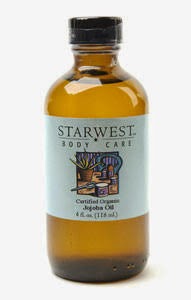
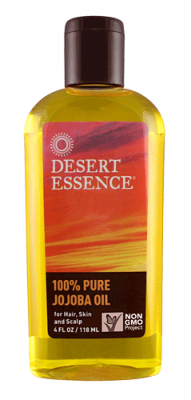
While jojoba oil isn't the toughest thing in the world to find, it's not going to be in every grocery store like coconut oil is - it's also slightly more expensive than coconut oil, but still cost effective.  Depending on the size of the container, jojoba oil generally retails between $10-$20, and you can purchase it in bulk for $30-$40... though, given the tiny amount you need for hair and skin care, you likely wouldn't ever need to buy it in bulk.  Below are a few online resources for purchasing jojoba oil if you aren't able to locate any in health stores near you:

http://www.starwest-botanicals.com/category/jojoba-oil/?utm_source=froogle&utm_medium=feed&gclid=CjwKEAiA_4emBRCxi8_f2cWWjFcSJAB-v1qy7Kn_2CMk8ac8g3JdOFfyIOAwTK1A9xFMwzsymCeGOBoCYhHw_wcB https://www.desertessence.com/store/100-pure-jojoba-oil


Want to know more about beauty products and their impact on your health?
Check out these articles from The Cozy Life.
http://amcozy.blogspot.com/2015/01/chemicals-in-cosmetics-whats-in-your.html
http://amcozy.blogspot.com/2015/01/pregnancy-and-nail-polish.html

http://topmommyblogs.com

Sunday, January 18, 2015

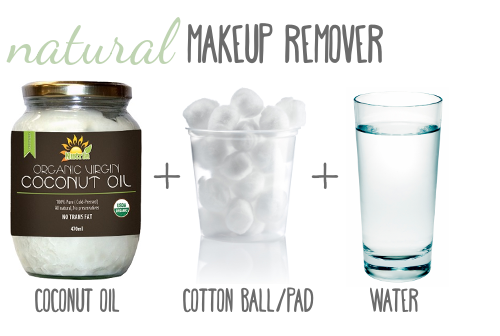
Natural Makeup Remover: Coconut Oil

I talk a lot about what we put onto our skin, but sometimes the harder question to answer is how to take it off - many cleansers and makeup removers on the market are filled with harsh chemicals and strip our skin of essential oil, making our skin super dry or even oily depending on the products we use.  This causes premature aging, and can change the way our skin produces oils.  One claim you'll see on many makeup removers and cleansers is "Oil Free" - don't consider this to necessarily be a good thing.

Oils, in their natural form, can actually really help our skin to retain moisture and stay youthful.  Which is why I use an oil - just one, nothing else - to clean my face off and remove my makeup every single day.  In fact, this way actually eliminates the need to moisturize my skin with facial lotions as well, helping me to save a ton of money in the process.  Here's the trick:

How It Works

Coconut Oil is truly a miracle ingredient - you can cook with it, wash your hair with it, and clean your face with it - among other things.  In addition to being versatile, it's also really cheap and super easy to find. 

When using Coconut Oil as a makeup remover, you simply need to scoop up a small handful (generally about 1/8 cup for me does the trick) and apply it to your face.  I live in California so my oil typically is somewhere in between solid and liquid, so I warm it up by rubbing my hands together and turning it fully into the liquid form - if you live in a colder climate, you will definitely need to use your hands to turn the solid oil (which is white in color) into the liquid form.  Rub the oil into your skin with your fingertips, anywhere that you have applied makeup.  I even use it on my eyelids without any problems.


The purpose of using a cotton ball or cotton pad is to wipe away the majority of the coconut oil once you've applied it.  This is when the makeup actually comes off - you'll see the makeup residue ALL OVER your cotton pad, so be sure that you're thorough and get as much of the oil off as you can.  I tend to focus more on gently wiping off my eyes, as mascara and eye shadow can take a few extra swipes to fully come off.


The final step is using warm water (tap water works fine for me, but you can always buy distilled or filtered water if you'd prefer) to rinse your skin off.  There is always a small amount of coconut oil left on the skin following this rinse - But that's actually a good thing.  Pat your skin dry (don't rub) and then use your hands to massage the remaining coconut oil evenly into your skin.  This acts like a moisturizer and ensures that your face doesn't feel dry following the removal of your makeup.

Tuesday, January 13, 2015

Is it "Safe?" - eos Smooth Sphere Lip Balm

I've done a lot of talking about what types of chemicals and toxins to avoid in your skin, nail, and hair care routines lately, so I thought that I'd go through my stash of beauty products and find something that we can really dive into.  I decided on a product that many, many, MANY women have bought in the past year or two - eos Smooth Sphere Lip Balm
This product is cute, comes in numerous flavors and colors, and has more celebrity endorsements than Wheaties.  I bought my first one about a year ago after seeing how obsessed my boss was with them - she literally collects them.  I'm pretty sure she has one of every color, even the new Visibly Soft flavors, Coconut Milk and Vanilla Mint (the striped packaging is adorable).  These are a bit pricier than "off brand" lip balms, but definitely still super affordable - I typically see them around $3-$4 each depending on where I'm shopping.

Are eos Lip Balm products "safe cosmetics?"

Each flavor varies slightly in ingredients, but the core components are the same.  Because blue is one of my favorite colors, we'll take a look at the ingredients of the Blueberry Acai flavor.

Ingredients:
Olea Europaea (Olive) Fruit Oil*, Beeswax/CERA ALBA (Cire d’abeille)*, Cocos Nucifera (Coconut) Oil*, Simmondsia Chinensis (Jojoba) Seed Oil*, Natural Flavor, Butyrospermum Parkii (Shea Butter)*, Stevia Rebaudiana Leaf/Stem Extract*, Helianthus Annuus (Sunflower) Seed Oil*, Tocopherol, Vaccinium Angustifolium (Blueberry) Fruit Extract*, Euterpe Oleracea (Acai) Fruit Extract*, Limonene**, Linalool**.  
*Organic. **Component of Natural Flavor. Certified Organic by Oregon Tilth. 

Quickly you'll notice that every single ingredient is classified as "organic," which is a huge step in the right direction for a lip balm.  Many lip balms contain petrolatum, a moisture barrier that can potentially cause cancer, among other things.  So... so far, so good!  Now here's a breakdown of each ingredient and what it's purpose is when used in cosmetics:
  • Olea Europaea (Olive) Fruit Oil: Used in beauty products most commonly as a conditioning agent, and can also be used in cooking as a healthy oil alternative.
  • Beeswax/CERA ALBA (Cire d’abeille): Commonly a moisture barrier when used in lip products and is considered a naturally safe ingredient.
  • Cocos Nucifera (Coconut) Oil: Can be used as a binding agent to keep beauty products in shape, and can also assist with bringing balance to dry skin.
  • Simmondsia Chinensis (Jojoba) Seed Oil: Naturally conditions skin and sometimes used as a stabilizer in cosmetics.
  • Butyrospermum Parkii (Shea Butter): Soothes dry and rough skin naturally - is also in many lotions and natural skin products.
  • Stevia Rebaudiana Leaf/Stem Extract: A masking agent and sometimes used for fragrance.
  • Helianthus Annuus (Sunflower) Seed Oil: A skin conditioner and cleansing agent in many natural beauty products.
  • Tocopherol: The fancy name for vitamin E, which is an antioxidant and skin conditioning agent.  If you want to get picky on this one, some studies have shown potential cancer concerns at extremely high doses - doses far higher than you'd ever see in a lip balm.
  • Vaccinium Angustifolium (Blueberry) Fruit Extract: Protects your skin and works as a soothing agent.
  • Euterpe Oleracea (Acai) Fruit Extract: A natural conditioning agent for the skin and hair.
  • Limonene: Made from a variety of citrus fruits, this liquid is used for flavor and fragrance.
  • Linalool: Natural floral scent, also used for flavor and fragrance.

Verdict: SAFE

Overall, this is a product that utilizes safe ingredients and has zero presence from the "dirty dozen" chemicals that are often hidden in our beauty products.  Given it's popularity, this is a major win in the battle for safe cosmetics.

Sunday, January 11, 2015

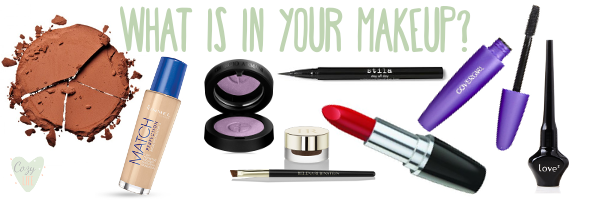
Chemicals in Cosmetics - What's in your makeup?

We've covered the chemicals in nail polish, so now let's talk about one of my other favorite subjects - makeup!  Cosmetics are such a staple of the "female experience" nowadays, but have we actually stopped to think about what's actually in our bronzers, concealers, lipsticks, and brow gels?  

It's important to keep in mind that cosmetics are applied directly onto the largest organ of our bodies - our skin.  Because of that, it's really important that we change our mindset about cosmetics and start to focus on what they do to our bodies, not just how they cover dark circles and pimples.  

So what are we putting on our bodies?  Commonly known as the "Dirty Dozen," cosmetics often contain BHA & BHT, coal tar dyes, DEA, dibutyl phthalate (DBP), preservatives, parabens, fragrances, PEG compounds, petrolatum, siloxanes, sodium laureth sulfate & triclosan.

Why are the "Dirty Dozen" harmful?  

  • Endocrine Disruptors: BHA & BHT, DBP, parabens, siloxanes, and triclosan are all potential endocrine disruptors.  These may create developmental, reproductive, neurological, and immune problems in humans - including reproductive issues, endometriosis, and cancer.
  • Cancer Causing Agent: BHA & BHT, coal tar dyes, DEA, preservatives, parabens, PEG compounds, petrolatum, and sodium laureth sulfate all have the potential to (or may be contaminated with chemicals that) cause cancer.  Parabens get a lot of news because they, in particular, are potentially linked to breast cancer.
  • Heavy Metals: Coal tar dyes are the culprit here - these dyes may contain heavy metals that are toxic to the brain.  Not good!
  • Create Antibiotic Resistant Bacteria: Triclosan is an antibacterial in cosmetic that may aid bacteria in becoming those scary "antibiotic resistant" bacterias that land people in the hospital.  Yikes!
  • Harmful to the Environment and Wildlife: BHA & BHT, DEA, DBP, and siloxanes have been linked to harming fish and other wildlife - don't hurt Nemo, folks!
  • Allergens & Breathing Problems: Some fragrances have been linked to asthma and are known allergens - and these chemicals are sometimes found even in products labeled "unscented."

Why are these chemicals in cosmetics at all?

Each of the "Dirty Dozen" serve a purpose in a wide variety of cosmetics and beauty products - ranging from deodorant to, shampoo, to lipstick, and everything in between - Here's a breakdown of their functions:
  • BHA & BHT: Preservative in both make-up products and moisturizers
  • Coal Tar Dyes: Pigment and coloring agent
  • DEA: Present in cream-based and foaming products - often shampoos and moisturizers
  • Dibutyl Phthalate (DBP): Plasticizer in nail products
  • Preservatives: Serve as preservatives... as you may have suspected
  • Parabens: Serve as preservatives
  • Fragrances: Scent agent in many beauty products
  • PEG Compounds: Present in many cream-based cosmetics
  • Petrolatum: In lip-balms as a moisture barrier and haircare products for shine
  • Siloxanes: Moisturizer, softener, and smoother in many types of cosmetics
  • Sodium Laureth Sulfate: Foaming agent in cleansers, bubble baths, and shampoos
  • Triclosan: Antibacterial agent in toothpaste, cleansers, and antiperspirants
Let's compare a few lipsticks to demonstrate the presence of these chemicals.  Because we're looking at lipstick, let's focus on coal tar dyes which can be located by seeking color index numbers (CI numbers) within the 75000 and 77000 ranges - below is a look at ILIA Lipstick, a lip product that is advertised as an organic product, and Revlon Super Lustrous Lipcolor, a typical drugstore brand.


BOTH products contain coal tar dyes - including the organic lipstick.  This is why it is critical that you really look into the ingredients of your beauty products - an organic label doesn't mean that the product is free of toxins.

What products are free of the "Dirty Dozen?"

After considering the above, what can you do to find natural and toxin-free cosmetics?  Don't fear - safe cosmetics DO exist!  There are a number of brands that specialize in toxin-free makeup and beauty products, including Coastal Classic Creations and Zosimos Botanticals.
 
http://topmommyblogs.com