Showing posts with label all-in-one. Show all posts

Tuesday, January 27, 2015

All-In-One Cloth Diaper Comparison

As a cloth-mom looking to maximize savings on my cloth diaper purchases, it's really important that I know what I'm getting into before making a diaper purchase.  Clearly, every mom and every baby is different, so what works for others might not work for me, but I want to make sure I've done my research on other mom's experiences before I make a decision to buy.

So that's what we're talking about today - How to make a decision to buy a particular cloth diaper.  I am looking into All-In-One's (check out my guide to cloth diapers here) and how to decide which brand is right for you.  I wanted to look at three different major cloth diaper brands to see how they measured up against each other - I chose bumGenius, Thirsties, and Blueberry.

What to Consider

Reviews:  What do other moms say about these diapers?  Sometimes online reviews will give you more information than anything else when considering which diapers to buy.  I try to balance both the good and the bad, getting as equal an opinion as I can.
  • bumGenius: On Diaper Junction, one reviewer said that the elemental AIO was "SO much more beautiful in person than I ever could have imagined. The elementals are super absorbent and I'm able to add more absorbency as needed for naps/night time which is awesome too!"  On Kelly's Closet, a different review gave a slightly less positive opinion, saying that "this diaper is ok. No leaks, but getting it on is tough because the layers don't lay flat on the smaller settings. It also takes ForEVER to dry."
  • Thirsties: I found a great review on Diaper Junction for this one: "We have both Thirsties AIO size 1s and Thirsties one-size AIOs in our diaper stash. The benefit of the redesign is that these dry so much faster than the sized type that had the tunnel design - no need to turn inside out to fully dry anymore. The downside is that they don't fit our baby quite as well as the size 1s. It will pay off in the long run, though, with not having to buy extra sizing as she grows. Haven't been able to use these at night without leaking around thighs."
  • Blueberry: The first review I read on this diaper at Diaper Junction said that "this diaper seems nicely made, but it is bulky and already small on my 12 lb baby. I am on the second to last snaps on the top and medium rise. There is no way this will last to 30+ pounds."  On Kelly's Closet, on review said "I like how the soaker folds out for faster drying, and how you can add additional absorbency under the soaker for heavy wetters. However, these are on the pricey side, especially since the natural fabric they use is just cotton, and not something more absorbent like bamboo or hemp, which would justify the price a bit more"

Cost: AIO's tend to be at the top of the price range for most cloth diapers - Some brands dip below $20 per diaper, others above $30.  Let's see how these do:

Sizing and Closures:  Cloth diapering "basics" tell the informed mom that you can get a diaper in "one size" or diapers that are sized to a smaller weight range, and diapers that come with two forms of closures - Snaps and Velcro (aplix / hook and loop).  Many moms have a preference here, so this is really dependent on what you prefer.
  • bumGenius: The elemental AIO is a one-size option that comes in a 3x3 snap down design and adjusts the sizing to small, medium and large sizes (approximately 8-35 lbs.)  Snap Closures.
  • Thirsties: These come in two sizes - Size 1 is advertised to fit babies weighing 6-18lbs (6-8kg) and Size 2 18-40lbs (8-28kg).  You can select either Snaps or Velcro closures.
  • Blueberry:  This diaper is advertised to fit babies weighing 10-35lbs, with a waist range of 9-21" (23-53 cm), thigh range of 4-12.5" (10-32 cm), and rise of 13.5-18.5" (34-47 cm). Snap Closures.

Fabric: Some moms don't have a preference, others do.  I prefer natural fibers if I get them, but not every brand has the same options to pick from.
  • bumGenius: Six layers of organic cotton for absorbency inside the diaper (next to baby) with an outer waterproof synthetic layer.
  • Thirsties: Internal trim-fitting soaker with three layers of absorbent microfiber terry, a stay-dry microfleece liner, and an outer waterproof synthetic layer.
  • Blueberry:  This diaper has a synthetic waterproof outer layer and 10 layers of 100% cotton birdseye fabric in the wet zone.  

 How do you make your choice?

This is the hard part - which one will end up being best for you?  Blueberry's option is just too pricey for me, so it's out.  Thirsties sounds like a great option that matches cost with decent reviews... but it lacks organic materials like bumGenius. 

The middle ground then, in my opinion, is the elemental AIO from bumGenius - organic cotton, reasonable pricing, and it has the closure/fit options that I prefer.  But another mom might go a completely different way - That's the benefit of cloth diapers.  You're able to try different things out and narrow-in on what works best for you and your baby.

Which would you pick?


http://topmommyblogs.com

Wednesday, January 21, 2015

What Cloth Diaper Is Right For You?

One thing that can be exceptionally overwhelming about jumping into cloth diapering is the VARIETY.  When you're buying disposables, it's simply a matter of size.  Some moms have preferred brands, but otherwise it's a very simple process of selecting a number, usually 1-6, and taking the diapers to the check-out counter.

Cloth diapering, however, has a myriad of options that, at first, can be extremely hard to understand.  How do you know what to buy if you've never done it before?  While you'll need to research TONS of different topics (detergents, wipes, prep, etc), it's often easiest to start with one simple question: What types of cloth diapers can I buy?

Flats 

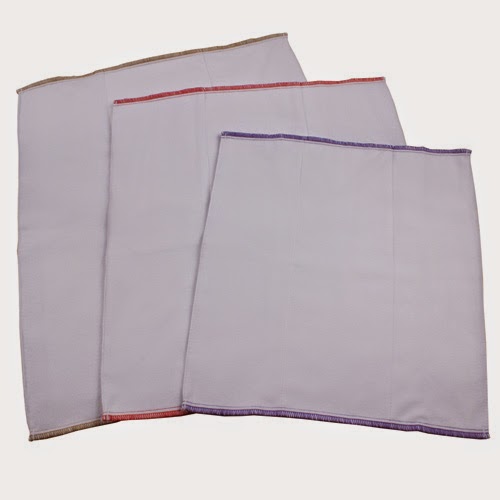
These are, as you many have guessed, flat diapers (think "old school" cloth diaper).  They are a sheet of absorbent fabric that you fold and fasten around your baby.  These come in a number of different fabrics, most commonly hemp and cotton.  They are inexpensive for the most part, but also require accessories in order to function.  With flats, you are dealing with just a sheet of fabric - it's not waterproof and it has no closures or fasteners to hold it together.  Nowadays, flats are most commonly used with snappi (or similar) fasteners and waterproof diaper covers.

Shopping resources for Flats:

Prefolds 

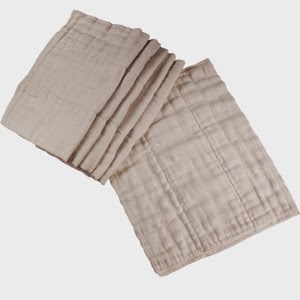
Much like flats, prefolds are a sheet of absorbent fabric that is folded and fastened around your baby.  They are different from flats in that they come "pre-folded" (hence the name).  Typical prefolds have a central panel that is much thicker than the outer sections, providing additional absorbency.  As with flats, prefolds need a few accessories in order to work as a diaper, given that they are not waterproof and have no closure to hold them together.  Snappi's and waterproof diaper covers do the trick with these as well.

Shopping resources for Prefolds:
http://www.clothdiaper.com/cloth-diapers/Prefolds/Indian-Prefold-Diapers-Unbleached-dozen.html http://www.momsmilkboutique.com/cloth-diapers-Thirsties-Hemp-Prefolds.html

Fitted

Another form of cloth diaper that doesn't have a waterproof layer, fitted diapers are generally made from the same materials used for flats and prefolds: cotton, hemp, etc.  These, however, actually LOOK like a diaper.  Where flats and prefolds need to be folded and fastened into shape, fitted diapers come already shaped, have closures, and are available in different sizes to offer a good fit for your baby.  You would need to place a waterproof cover over the top of a fitted in order to avoid leakage.

Shopping resources for Fitteds:
http://www.kissaluvs.com/fitted-diapers.php http://www.rgnaturalbabies.com/i_158/Tiny-Tush-Trim-Organic-Cotton-One-Size-Fitted-Cloth-Diapers.htm

Diaper Cover / Diaper Shell

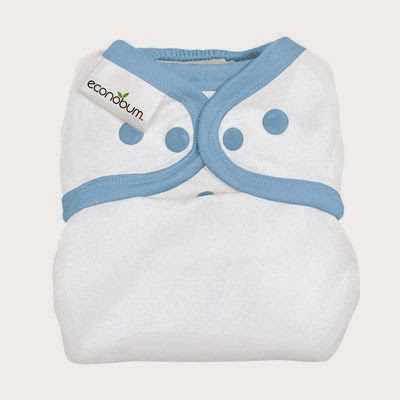
A "cover" lacks any absorbent layers and is just the shell utilized with flats, prefolds, and fitted diapers in order to make them waterproof.  Most covers are made using TPU and PUL, synthetic fabrics that come in a variety of patterns and colors, and have either velcro or snap fasteners built into them.  Used alone, these would do nothing for your baby - they absolutely must have an absorbent diaper under them in order to function.  These can be purchased in specific sizes, or in adjustable "one size" options.

Shopping resources for Covers/Shells:
https://www.cottonbabies.com/product_info.php?products_id=4891&gclid=Cj0KEQiAuf2lBRDW07y3z6f96awBEiQA0IngJi3FP2iH2WrCcqOi6KtbvrlBDdVX5SNHnsLgx8WQSzAaAmmr8P8HAQ http://www.rakuten.com/prod/grovia-cloth-diaper-shell-snap-limited-edition-wee-gallery-prints-up/268991373.html?sellerid=38374129&sclid=pla_google_LaStellaBlu&adid=29963&gclid=Cj0KEQiAuf2lBRDW07y3z6f96awBEiQA0IngJhiZpLVMV2IQuOr-Fme77t4c_CzUJSxVdIJxxk2vFcAaAiLl8P8HAQ

Pocket

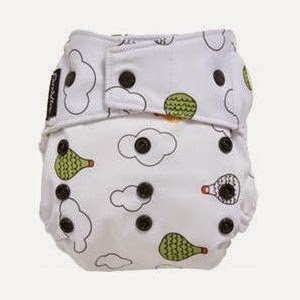
Pocket diapers have a waterproof shell with closures and a soft inner liner, typically microfleece, that then needs to be stuffed with a diaper insert for absorbency.  Inserts come in a variety of fabrics and you can generally swap out most inserts and use them for multiple diapers, or use multiple inserts at a time for added absorbency.  Most brands offer pocket options in single sizes and "one size" adjustable options.

Shopping resources for Pockets: 
http://www.amazon.com/Kawaii-Baby-Pocket-Diaper-Microfiber/dp/B009M9F8N4  http://www.bumgenius.com/style/bumgenius-stay-dry-4-0/

All In One (AIO)

This diaper is the most similar cloth option to a disposable - this is because it's waterproof, absorbent, and has closures all in one piece, with nothing to add, stuff, or layer.  Like pockets, AIO's can come in single sizes and "one size" adjustable options.  These are also, generally speaking, the most expensive of the cloth diaper options on the market.  Another downside is dry time - because these diapers have layers of absorbent material and the outer shell all connected together, they will take longer than other cloth diapers to dry after washing.

Shopping resources for AIO's:
http://www.kellyscloset.com/Thirsties-Individual-Ocean-Collection-One-Size-All-In-One_p_5475.html http://www.kangacare.com/Lil-Joey-Newborn-Cloth-Diapers.html


All In Two (AI2) / Hybrid

All In Two diapers are, in my opinion, a kind of cross between a pocket diaper and an AIO.  They look a lot like an AIO, but their inner absorbent layer can be detached and replaced.  While that might sound A LOT like a pocket diaper, AI2's outer layer can often be reused once the soiled insert is detached, where a pocket diaper (and an AIO) must be completely replaced at each diaper change.

Shopping resources for AI2's:
http://www.diaperjungle.com/GroVia-Experience-The-Gro-Package.html http://www.gdiapers.com/shop/gpants-diaper-covers/great-orange-gpants

http://topmommyblogs.com

Saturday, January 17, 2015

The Importance of Cloth Diaper "Prep"

If you've looked into cloth diapering, even just a little bit, "prepping" is probably a term you've seen A LOT of.  But what does it mean and why is it so important?

What is "Prepping?"

Cloth diaper prep is, simply put, the process in which you take a brand new diaper and prepare it for use.  Depending on the type of diaper and the fabric involved, the actual process of prepping your diapers will vary.  What does NOT vary is the fact that some form of prep should take place - covers, AIO's, AI2's, pockets, fitted's, prefolds, flats, inserts, soakers, doublers, etc. should be prepped before you put them on your baby.

I'll do my best to keep things simple, so I'll just add that "prepping" a diaper for use involves WASHING that diaper, usually multiple times, prior to actually using it.  This washing process increases the absorbency of your diapers and cleanses them of any irritants left over from the manufacturing process.  So... How do you prep a cloth diaper?

Like I said, it varies.  A great deal of this variance is related to the fabric of your diapers.  If you want to keep the thought process simple, you can (with a few exceptions) say that diapers made of natural fibers are prepped differently from those made with synthetic material.

Natural Fibers

When I say "natural," I mean fabrics like hemp, bamboo, cotton, etc - These have a naturally occurring oil in the fabric when you purchase the material new.  This oil makes the fabric more water resistant, which is something you do NOT want your diaper to be.  When prepping these kinds of natural materials, you'll want to wash this oil out of the fabric through repeated washes.  The prepping process is also training the material to absorb liquid, which makes it more effective as a diaper.
Cotton and hemp are also popular materials for prefolds - this type of cloth diaper requires a lot of prep in order to get the fabric ready for use, specifically related to absorbency.  When you buy a brand new prefold, it looks like a very thin sheet of fabric - by washing your prefolds multiple times, a process called "quilting" occurs, where the fabric of the prefold begins to thicken up and increases in absorbency.

Synthetic Fibers

When you consider man-made materials used in cloth diapering - like microfiber, TPU (thermoplastic polyurethane), or PUL (polyurethane laminate) - the prepping process is less "involved" than with natural materials.  Because these are man-made materials, they do not have any "naturally occurring" oils to worry about and they are engineered to be absorbent from the get-go - these materials just need to be cleansed.
 Because these materials are man-made, however, you do need to pay attention to your method of washing these.  TPU, for example, is recommended for washing only in medium/low temperatures.  PUL, however, can be washed in high temperatures.

How many times should I wash my diapers before use?

To a certain extent, these numbers are up for debate.  Some would recommend more, others less.  However, it should be mentioned that your prefolds and fitted's will continue to gain absorbency for a little while through use - so don't give up on a diaper if it's not 100% absorbent immediately after prep.  Overnight use with a new diaper might also be tricky, so be sure to plan ahead with extra absorbency layers to accommodate.

I also recommend drying between wash cycles - many mom's will say not to bother and just use repeated washes with a dry at the very end - Again, it's up to you and what you're comfortable with. 
  • Prefolds: 4-6 washes, dry in between
  • Natural Fiber Inserts: 2-3 washes, dry in between
  • Fitted: 2-3 washes, dry in between
  • Synthetic Pockets: 1 wash
  • Synthetic AIO's and AI2's: 1 wash
  • Synthetic Inserts: 1 wash
  • Synthetic Covers: 1 wash  

How hot should the water be?  Detergent?

Generally speaking, prep should be done with hot water.  However, like I mentioned before, there are some synthetic materials that are not meant for use with super hot water, so please read manufacturer labels!  With your natural fibers, though - HOTTER IS BETTER.

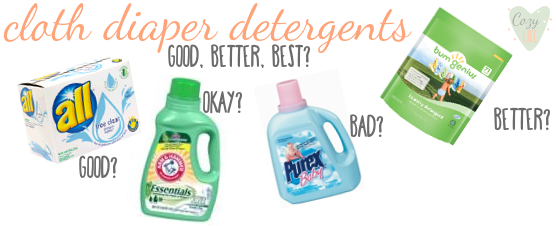
As far as detergent goes, use some during your first wash cycle for cleansing purposes - after that, it's not really necessary.  Prepping for absorbency has more to do with the actual water making it's way into the fabric - not the detergent.  But, if you want detergent during all cycles, that's okay too.  Just be sure that you're using a detergent that is safe for cloth diapers.  For more information on detergents, click here to see why not all detergents were created equally!
http://amcozy.blogspot.com/2015/01/diy-or-buy-cloth-diaper-detergent.html

Can I boil my diapers?

I've never been a fan of this method, simply because it's labor-intensive and I'm ALL for easy! "Work smarter, not harder," as my mom always said!  However, there are some women that swear by this method - so we'll agree to disagree.

If you are interested in boiling, you definitely can, but only if they are 100% natural materials - like cotton and hemp prefolds or flats.  Please, please, please - do NOT boil anything with a pull, or velcro, or snaps, etc.  You run the risk of ruining the diaper AND causing a huge mess.  Once you're sure that the diaper is okay to boil, the basic process is fairly easy - When boiling, put the material on the stove for 15-30 minutes and follow this by putting diaper in the washer for one cycle before use.
http://topmommyblogs.com

Saturday, January 10, 2015

Cloth Diaper Stash 1.0: Update!

Orders have arrived and we've reached the point where it's time to take stock of what we have before moving on to cloth diaper prep for Cozy Baby #2 - Look forward to those details in a future post!

Before we begin washing and organizing, it's important to us that we're sure we have what we need - as you review this list, you'll likely notice that we haven't gone for a 100% "crunchy" approach, and we've decided against DIY options for now.  We still need to figure out wipes and a few other details as well, but we're well on our way to finalizing Cozy Baby #2's first stash.
Our current stash stands at more than 20 diapers, a combination of pocket diapers and prefolds with covers.  We have a TON of inserts, snappi fasteners, diaper rash cream safe for cloth diapers, our diaper pail is figured out, and we've decided to try out flush-able liners in place of a diaper sprayer for now.  For washing, Cozy Hubby insisted on a store-bought detergent, so we've opted to purchase the Baby ECOS plant-based laundry detergent (Cozy Hubby also insisted on liquid over powder, but we'll see how that goes). 

When added, our total cost for this "starter stash" has hit the $200 mark, factoring in the accessories.  Several of the diapers were also gifted to us, which helped out on savings (thanks, Dad!).

What I think is important for new parents considering cloth diapers is that while a lot does go into the preparation and the up-front cost is higher than with disposables, the end result is going to be worth it.  You also don't have to purchase every single accessory under the sun - to be honest, I don't even have a changing table (we never used the one we had with Cozy Baby #1 and it felt silly to purchase one this time around),  so we're not going over-board on fancy gadgets and name brand products.  

Why only Pockets and Prefolds?

As we reviewed all of the options available, Cozy Hubby and I decided that pockets and prefolds would be the best options for us.
  • Flats: I never considered flats over prefolds - the cost comparison between the two didn't show a huge difference, and I felt that prefolds would work better for us if ever needed to use them as inserts for our pocket diapers.
  • All-In-One's: We opted to pass on AIO's for a few reasons.  First, the cost.  Most of the brands we considered cost $15-$25 per diaper, where pocket diapers of equal quality were in the $10-$15 range and came with two inserts each (on average).  The second factor was dry-time.  Given that we're likely to start off with a stash around 20 diapers, we wanted to make sure that our wash and dry times weren't excessive.  We'll have to wash frequently, and with the goal of air-drying our stash, AIO's take the longest due to the multiple, thick layers of fabric.
  • All-In-Two's: I noticed that some diapers advertised as AIO's were actually "all-in-twos," meaning that the absorbent layer of the diaper was detachable.  This would address my concerns about AIO dry-time, but not the cost.  These were in the same price range as traditional AIO's, so not something I wanted to invest in quite yet.

http://topmommyblogs.com