Showing posts with label babies. Show all posts

Sunday, February 1, 2015

What's In Your Baby Shampoo?

As you've probably figured out, two of my passions are safe cosmetics and being an "Eco-Mom" - today I want to combine those ideas!  Over the past few weeks I've talked about nail polish, hair care... even makeup remover - But what about the hygiene products that we use on our children?  There is, unfortunately, just as much of an opportunity for nasty chemicals to sneak their way into our toddler and infant products as they do our own hair and skin care.  One product in particular has always bothered me - Baby Shampoo.

Looking at the ingredient labels on shampoos - baby or otherwise - is generally a test on your language skills.  Chemical compounds that are virtually unpronounceable are in almost every single shampoo product out there.  So how can you figure out which shampoo is best for your baby?

Generally speaking, the baby shampoo market is "safer" than adult shampoos - a lot of the SUPER nasty stuff doesn't get included in products designed for infants... typically.  But even some of the most popular baby brands still include ingredients that are really unhealthy for a growing baby.

First, we'll look at Aveeno Baby Wash and Shampoo.  This formula is advertised as tear-free, gentle, and moisturizing.  In the US, 12fl oz. go for around $9.00, depending on the retailer.  Aveeno is also a really popular brand for baby lotions, creams, oils - you name it.


This is NOT, however, a product I would use with my baby.  Why?
Gastrointestinal and liver toxicity?  Immune and allergenic effects?  Respiratory toxicant?  Environmental toxins?  Yikes!  To be fair, these ingredients are in very limited quantities - but they're still there.  Given that this is such a popular brand and SO easy to find, are there any better alternatives?

Next we'll look at Babyganics Night Time Shampoo + Body Wash.  Just by looking at it, this one seems more hopeful - "ganics" as in  "ORganics!"  Perfect!  This formula has no parabens, sulfates, phthalates, mineral oil, petrolatum, gluten, artificial fragrances or dyes - wonderful!  This one costs around $12.00 for 18fl oz. here in the US, so it's even a bit more cost effective than the Aveeno option.

But... it's not all perfection.  Here's why:


Nervous system toxicity is NOT something I want in my baby's shampoo. On top of that, this product also contains fragrances (though non-artificial), just like Aveeno.  So while this brand is certainly an improvement, it's not quite where I'd like it to be.

By now, you're probably thinking that it's time to open up Pinterest and look into DIY baby shampoo, huh?  While that's a wonderful idea - and one I'll cover in another blog post - there is one store bought baby shampoo that combines convenience in availability with a lack of harmful ingredients.

Burt's Bees Baby Bee Shampoo & Wash, Fragrance Free - this is as close to "safe" as you're going to get at any major retailers.  For $9.00, you can get a 12fl oz. bottle and this brand has become so popular that even Target and WalMart stock almost their entire catalog in their stores.

This is a tear-free and plant-based formula made with aloe, soy proteins, and oat flour.  It does contain sodium benzoate, which has has been deemed safe for use but is a restricted ingredient in large quantities when used with cosmetics... So it's not perfect as a product, but it's pretty close.

The bottom line as a parent is simply to educate yourself - know what chemicals are in your baby's shampoos, detergents, wipes, etc.  This will help you in making the best purchasing decisions for your family.


Want more on safe products for baby?  Check this out!
http://amcozy.blogspot.com/2015/01/diy-or-buy-cloth-diaper-detergent.html

http://topmommyblogs.com

Thursday, January 22, 2015

Conflicting Feelings, My Pregnancy With Baby #2

As a mother who'd secretly been hoping for a second child since about... three seconds following the birth of my first, I was a bit shocked at my reactions throughout my pregnancy with Baby #2.

I have been constantly conflicted.

You see, my son is six - he's in kindergarten and finally starting to spread his wings and become a more independent little creature.  It's a joy to watch him make new friends, learn new things, and start to truly appreciate the world around him.

For the past several months, though, my pregnancy has forced me to take a step back from my son's adventures due to various complications that kept me a home in bed, while my husband went to school functions, birthday parties, etc.

I've found myself frustrated - even angry - that I was MISSING OUT on my son in order to bring this new baby into the world.  Those feelings, not at all aimed at my unborn daughter - more of a reaction to my own limitations - shocked me.  I never would have thought that I'd be one of those "miserable pregnant ladies" ... But I think I am sometimes.  So what can I do to stop this cycle of frustration and anger in order to enjoy both my son and my pregnancy?

Accept Your Limitations

I think that we moms do occasionally hold ourselves to the "Super Mom" standard - we think that we should be able to anything and everything... and then we get upset when we can't.  It's important that we accept the fact that, while we're pretty amazing, we are NOT Super Woman.  During pregnancy, our bodies are going through so much - It's okay to be tired.  It's okay to stay in bed an extra hour and let your husband cook breakfast.  It's okay to miss the daily school drop-off because you've got severe morning sickness.

https://www.etsy.com/listing/129200259/supermom-funny-novelty-t-shirt-z13010IT'S OKAY.  We can't be everywhere, we can't do everything.  Accepting that you can't do it all is the first step in limiting your frustrations when you're aren't there for EVERYTHING.  My son loves running into the room to show off a project and to let me know his spelling test scores.  He knows that his little sister is in my belly that it makes me tired sometimes... and you know what?  He understands.  He's only six and he manages to cut me more slack than I do.

Enjoy the Little Things

Recently my son participated in a Spell-A-Thon at school and parents were invited to sit in to watch as the kids all took a spelling-bee style test.  I'd worked with Baby #1 on his words at home and while he wasn't 100% perfect with everything, I knew he'd do extremely well.  That practice at home was so much fun - he started quizzing me too and it ended in fits of giggles as I tried to spell "supercalifragilisticexpialidocious" (I couldn't, by the way).

The day of the Spell-A-Thon arrived and I couldn't make it - between feeling incredibly rundown (did I mention I'm 9 months pregnant?), having extremely swollen feet that made walking a problem, AND work, I had to miss it.  My husband attended in my place... and I was miserable.  I wanted to be there SO badly.  So, instead of enjoying the memory of those giggles from preparing for the Spell-A-Thon, I could only focus on the fact that I wasn't there for the main event.

...and that's not fair to me or to my son.  We had an absolute BLAST studying his spelling words and he shared the entire story about the Spell-A-Thon with me that night at home.  These moments doing homework - while they may not stick out as "monumental" in the grand scheme of things - are still important and I should still be able to enjoy them, not focus on all of the other things that I couldn't participate in.

Super Mom Image (c) Rogue Attire
http://topmommyblogs.com

Saturday, January 17, 2015

The Importance of Cloth Diaper "Prep"

If you've looked into cloth diapering, even just a little bit, "prepping" is probably a term you've seen A LOT of.  But what does it mean and why is it so important?

What is "Prepping?"

Cloth diaper prep is, simply put, the process in which you take a brand new diaper and prepare it for use.  Depending on the type of diaper and the fabric involved, the actual process of prepping your diapers will vary.  What does NOT vary is the fact that some form of prep should take place - covers, AIO's, AI2's, pockets, fitted's, prefolds, flats, inserts, soakers, doublers, etc. should be prepped before you put them on your baby.

I'll do my best to keep things simple, so I'll just add that "prepping" a diaper for use involves WASHING that diaper, usually multiple times, prior to actually using it.  This washing process increases the absorbency of your diapers and cleanses them of any irritants left over from the manufacturing process.  So... How do you prep a cloth diaper?

Like I said, it varies.  A great deal of this variance is related to the fabric of your diapers.  If you want to keep the thought process simple, you can (with a few exceptions) say that diapers made of natural fibers are prepped differently from those made with synthetic material.

Natural Fibers

When I say "natural," I mean fabrics like hemp, bamboo, cotton, etc - These have a naturally occurring oil in the fabric when you purchase the material new.  This oil makes the fabric more water resistant, which is something you do NOT want your diaper to be.  When prepping these kinds of natural materials, you'll want to wash this oil out of the fabric through repeated washes.  The prepping process is also training the material to absorb liquid, which makes it more effective as a diaper.
Cotton and hemp are also popular materials for prefolds - this type of cloth diaper requires a lot of prep in order to get the fabric ready for use, specifically related to absorbency.  When you buy a brand new prefold, it looks like a very thin sheet of fabric - by washing your prefolds multiple times, a process called "quilting" occurs, where the fabric of the prefold begins to thicken up and increases in absorbency.

Synthetic Fibers

When you consider man-made materials used in cloth diapering - like microfiber, TPU (thermoplastic polyurethane), or PUL (polyurethane laminate) - the prepping process is less "involved" than with natural materials.  Because these are man-made materials, they do not have any "naturally occurring" oils to worry about and they are engineered to be absorbent from the get-go - these materials just need to be cleansed.
 Because these materials are man-made, however, you do need to pay attention to your method of washing these.  TPU, for example, is recommended for washing only in medium/low temperatures.  PUL, however, can be washed in high temperatures.

How many times should I wash my diapers before use?

To a certain extent, these numbers are up for debate.  Some would recommend more, others less.  However, it should be mentioned that your prefolds and fitted's will continue to gain absorbency for a little while through use - so don't give up on a diaper if it's not 100% absorbent immediately after prep.  Overnight use with a new diaper might also be tricky, so be sure to plan ahead with extra absorbency layers to accommodate.

I also recommend drying between wash cycles - many mom's will say not to bother and just use repeated washes with a dry at the very end - Again, it's up to you and what you're comfortable with. 
  • Prefolds: 4-6 washes, dry in between
  • Natural Fiber Inserts: 2-3 washes, dry in between
  • Fitted: 2-3 washes, dry in between
  • Synthetic Pockets: 1 wash
  • Synthetic AIO's and AI2's: 1 wash
  • Synthetic Inserts: 1 wash
  • Synthetic Covers: 1 wash  

How hot should the water be?  Detergent?

Generally speaking, prep should be done with hot water.  However, like I mentioned before, there are some synthetic materials that are not meant for use with super hot water, so please read manufacturer labels!  With your natural fibers, though - HOTTER IS BETTER.

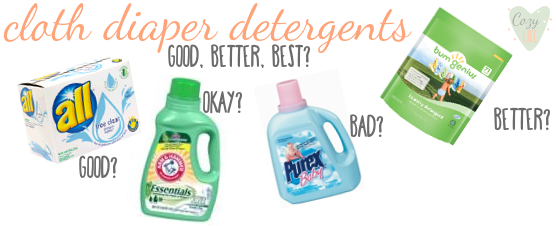
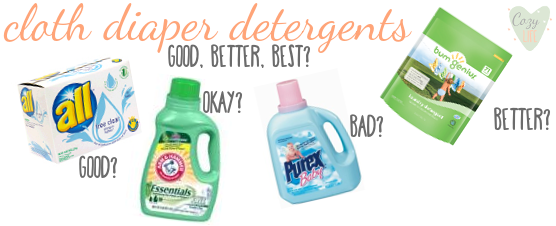
As far as detergent goes, use some during your first wash cycle for cleansing purposes - after that, it's not really necessary.  Prepping for absorbency has more to do with the actual water making it's way into the fabric - not the detergent.  But, if you want detergent during all cycles, that's okay too.  Just be sure that you're using a detergent that is safe for cloth diapers.  For more information on detergents, click here to see why not all detergents were created equally!
http://amcozy.blogspot.com/2015/01/diy-or-buy-cloth-diaper-detergent.html

Can I boil my diapers?

I've never been a fan of this method, simply because it's labor-intensive and I'm ALL for easy! "Work smarter, not harder," as my mom always said!  However, there are some women that swear by this method - so we'll agree to disagree.

If you are interested in boiling, you definitely can, but only if they are 100% natural materials - like cotton and hemp prefolds or flats.  Please, please, please - do NOT boil anything with a pull, or velcro, or snaps, etc.  You run the risk of ruining the diaper AND causing a huge mess.  Once you're sure that the diaper is okay to boil, the basic process is fairly easy - When boiling, put the material on the stove for 15-30 minutes and follow this by putting diaper in the washer for one cycle before use.
http://topmommyblogs.com

Thursday, January 15, 2015

Back into the game - Returning to work after baby

Yesterday I attended a local networking event for small businesses and met an interesting woman who had labeled herself a "Working Mom Support Coach."  Essentially, she provides guidance for women who can't handle the readjustment back into the workforce following the birth of their children.   She had zeroed in on me as the "token pregnant lady" at the event and spoke to me about how women needed extra support in learning how to achieve a new life balance.

As a working mom, I thought this was an interesting concept - How hard is the readjustment when we go back to work?  I don't think that I really focused on the "difficulty" last time - going back to work was just my reality.  However, when you consider the hormonal changes in our postpartum bodies, the guilt of leaving our child with a daycare provider or family member, trying to find a place to pump at the office, etc... It can be a really tough time for us.

So how can we "get back into the game?"

I'm extremely proud of my career - while I'd love to be a Stay-At-Home-Mom, it's not in the cards for my family, and my reality is that I'm going back to work following the birth of my daughter... and yes, it'll be hard on me physically and emotionally - So how can I prepare and make this transition easier?
Stay Focused: It's easy to get overwhelmed by the idea of leaving a small baby at home and heading to the office for eight hours while someone else takes care of your child - parental guilt is common, especially when you're first making the transition following your maternity leave.  What I've found works to help you find your "new balance" is to stay focused on what you're doing - don't focus on what you're NOT doing.

I don't know any working moms that wouldn't rather spend more time with their children - but if you focus solely on what you're missing out on at home, you'll never be able to readjust to work-life.  When you're at work, be AT WORK.  When you're at home, be AT HOME.  Be as amazing at your job as you were before, stay in touch with your child's care provider during breaks and lunch, and leave the deadlines and budgets and benchmarks at the office when you leave for the day.  Don't try to carry the load of mom and employee 24/7.

Take Care of You: Often times, whether you're a working mom or a stay-at-home-mom, we mothers tend to focus on everyone else but ourselves.  The last person to get the care and attention they deserve is US.  Maybe it's just our maternal nature... Or, for working moms, that desire to "make up" for what we miss while we're at work.  Frankly, that's not fair.

Postpartum, our bodies are a roller coaster.   Hormones are going nuts, many of us have extra weight that makes us feel unattractive, and we're healing from a pretty major physical stress - giving birth to a child is no joke!  For weeks, sometimes months, our bodies just don't feel "like us" and it's not right to forget that we have our own needs.  So what do you do?

Take a bubble bath.  Eat healthy.  Get your partner's help with the baby night so that you can get some sleep.  Get your hair done.  Paint your nails.  DON'T FORGET THAT YOU'RE IMPORTANT TOO.

Don't Compare: One of my biggest pet-peeves is when mothers, or just women in general, compare themselves to each other.  As the mother of a kindergartener, I'm constantly feeling the pull of comparing myself to the moms that can drop their kids off and pick their kids up from school everyday - I only get to do that once a week because of my schedule, and I've created this false idea that those moms must think I'm a horrible parent because they see my husband more than they see me.

The reality is that putting the stress of comparison on ourselves only makes us unhappy.  Yes, there are times when I wish I'd pushed harder to be the stay-at-home parent in my marriage, but the honest truth is that I'm the working-parent for a reason.  I value my time at the office and I want to be out there growing as a professional - and there's nothing wrong with that.  I LOVE my job.  My husband is such an amazing man for letting me chase my dreams and I'm incredibly luckily that he was willing to leave his career to raise our kids.

Bottom Line?

Working parents are common, so don't hate yourself for leaving your baby to get back to work.  It's important that we set a good example of our kids, whether we stay at home with them or if we go back to the office.  If you spend your life focused on guilt and everything that you aren't doing, it'll be hard to set that great example because you'll be miserable.  No, you might not get a "home cooked" dinner on the table every night and yes, you'll miss the occasional milestone - and it will suck.  But if we lived our lives based on what we didn't do, we'd never accomplish anything.  Just love yourself and love your kids.  It's the best any of us can do.
http://topmommyblogs.com

Wednesday, January 14, 2015

Creating a Birth Plan - Part Two: Delivery

Now that we've covered considerations for labor, it's time to think about the main event - Delivery!  Again, I don't want to exclude any birth options here - just give you a few things to think about.  If you have additional items on your birth plan regarding labor or delivery, please let me know in the comments - it's always great to hear from other moms.


  • Positioning: During labor you may have used specific techniques to work your way through contractions - now that it's time to push, do you have a plan?  Would you like to squat, have assistance with leg support, stand up, be in a birthing tub, lay on your side, etc?  Be sure to share your preferences with the staff at your hospital/birthing center, or have the area ready well in advance if you've chosen a home birth.
    http://www.health-and-parenting.com/best-positions-birth/
    Image (c) Health & Parenting
  • Coaching: Are you going to "wing it" as you push, or are you going to have coaching support?  Following your body's natural instincts may seem a little scary, but I found that my body just took over once I began the final stages of labor - But what if you're not comfortable with that?  Perhaps you have a doula or you have developed a plan with your partner - regardless of your approach, let those around you be aware if you'd like to depend on them for guidance.
  • How's it looking down there?  Would you like to watch as your child enters the world by aid of a mirror?  Do you want to keep your eyes as far from that experience as possible?  Some women enjoy the ability to watch as the baby crowns and then eventually makes it's way into the world - I wasn't one of those moms.  A good way to judge this is to either witness a birth in-person or watch a birthing video so that you know what to expect.
  • Episiotomies and Tearing: I covered this last time as well, but it bears repeating - Have you thought about whether you would like to try alternatives like perineal massage before resorting to an episiotomy?  Would you rather tear naturally than have the incision?  Talk to your healthcare provider about their approach to tearing as well so that you're prepared for their advice during labor.
  • The Big Moment:  Would you like yourself or your partner to pull the baby "up and out?"  Are you going to have the baby placed on your chest immediately after birth?  For C-Section moms, would you like to try for as much facial contact as possible once the baby is delivered - and will your partner follow the baby out of the operating room or stay with you?
  • Cutting the Cord: This is both a question of "Who?" and "When?"  Would you like to cut the cord yourself or would you like your partner too?  Are you okay with immediately cutting the cord or would you like to delay this until the cord stops pulsating?  What about banking of cord blood - are you familiar with what that process is like and have you already paid to set up cord-blood banking?
  • Placenta: When it comes to the delivery of your placenta, would you like to have spontaneous delivery?  Are you interested in viewing the placenta or retaining it?  Should your healthcare provider discard it?  It's become much more mainstream to consume your placenta after birth - are you aware of the options and the benefits? 
  • Baby's First Exam: Often in hospital births the nursing staff will remove the baby to the other side of the delivery room to complete baby's first exam - Would you prefer that this process be completed while your baby is still on your chest?  If not, would like yourself or your partner present during the exam?  Also consider heel sticks - my son got one without my knowledge when he was born - be sure you're fully aware of everything that is happening to your baby!  If you are having a home birth, what is the plan if your care provider feels that your child needs medical attention?
  • Post-Delivery Medications for Mom: Pitocin following delivery is common for the prevention of postpartum hemorrhage - would like this administered or would you prefer to skip it?  What about acetaminophen, percoset, stool softeners, or laxatives for pain relief following delivery?
  • Post-Delivery Medications for Baby: Eye ointment is very common for babies, used to prevent blindness.  Vitamin K injections are also fairly common for bleeding prevention.  Do you have a preference for when these medications are administered?  Would you prefer that your child not receive one or the other?
  • Bathing your newborn: Do you want your baby bathed after birth, or would you like to wait?  Do you know the benefits of vernix on your baby's skin and what a 24 hour absorption period can do for your child?

Next Up!

Postpartum, Emergencies, and Composing your Birth Plan are still to come in this series.  Keep updated on future posts by following or subscribing to The Cozy Life!

http://topmommyblogs.com

Monday, January 12, 2015

The Scoop on Baby Wipes

I've been so focused on building a cloth diaper stash that wipes have taken a bit of a backseat to getting in the more "fun" diapering purchases.  But, with only five weeks left before Cozy Baby #2 gets here, it's time to consider baby wipes and our options.  To make things easier on myself, I'm separating baby wipes into four basic categories:

In considering the pro's and con's, a few of these really stick out to me... and I'm sure that you're likely assuming that I'm leaning toward the cloth ones, right?  Well, let's see:

Traditional Disposable Wipes

There are SO many different brands of disposable wipes that it would be extremely difficult to go over every option out there, so let's keep this basic: Brands like Pampers and Huggies have entire lines of wipes - normal, scented, unscented, sensitive skin, and even "natural."  Typically these types of wipes sell at a rate of $0.02-$0.05 per wipe.

The problem with more traditional (and readily available) baby wipes are the chemicals in them - which may include alcohol, perfume, chlorine, pthlalates, parabens, and dioxin.  These can be really harmful to your baby's skin - and result in the absorption of toxins into their bodies that could potentially cause hormonal issues and some forms of cancer.

Eco-Friendly Disposable Wipes

There are now a number of eco-friendly disposable wipes on the market that are safe for the environment, biodegradable and/or flushable.  These brands are typically harder to find and more expensive than more traditional disposable brands, averaging $0.05-$0.10 per wipe.  Popular brands include Seventh Generation and Earth's Best.

However great the word "biodegradable" might sound, and how nice "safe for the environment" seems, these wipes aren't necessarily good for your baby.  Many of these still contain alcohol, which can irritate baby's skin.  The majority are paraben, chlorine, and pthlalate-free though, which does make them the "lesser of two evils" in the great world of disposable wipes.

Name Brand Cloth Wipes

Many of the popular cloth diaper companies also have their own line of cloth wipes made out of various fabrics - flannel, cotton, hemp, and microfleece to name a few.  Popular brands for this option are Thirsties, bumGenius, and BabyKicks.  Much pricier per-wipe than their disposable counterparts, these wipes can cost anywhere from $1.00-$2.00 per wipe.

So why invest that much money into a wipe?  Simple - these are reusable.  They require the same washing routine as cloth diapers and contain zero chemicals that might harm your baby.  A single wipe could last you the entire 2.5 years that your baby is in diapers.

DIY Cloth Wipes

Cloth wipes don't need to be fancy name brand purchases.  In fact, soft baby washcloths or recycled washcloths/towels you already have in your home would do just fine as cloth wipes.  The thing to keep in mind is that your baby's skin will be sensitive, so don't select anything that has overly-rough fabric that might irritate your baby - and don't forget that microfiber isn't a fabric that can go directly onto baby's skin!  We have several MF cloths laying around the house and these are definitely not meant to be used on skin (for us or a baby).  Stick with natural fabrics - cotton and flannel are probably the easiest to find.

If utilizing washcloths you already own, this type of baby wipe could be completely free.

There is one "catch" with cloth wipes, though - they aren't a standalone product.  You do need to purchase additional items in order to make your name brand or DIY wipes work for you and your baby.

The most basic accessories are water and a spray bottle - your wipes need to be dampened prior to use, and water works just fine for this.  At home, the spray bottle might not be necessary - when you're out and about, a small travel-sized spray bottle with water in it will do the trick.

Also required for "on the go" cloth wipes, as with cloth diapers, is a wet bag to hold any used wipes.  This doesn't need to be fancy, but many different options are on the market for "cute" wet bags... though a ziploc bag will do in a pinch, products specifically labeled as "wet bags" are washable, and thus reusable.

Optional accessories include a wipe solution if you aren't comfortable with just using water (there's a great one available by bumGenius) and a wipe warmer if you'd like prepped wipes available for immediate use.  Wipe solution and a wipe warmer are options that I'm passing on for now, but many moms find them to make the whole process more convenient. 
http://topmommyblogs.com

Saturday, January 10, 2015

Cloth Diaper Stash 1.0: Update!

Orders have arrived and we've reached the point where it's time to take stock of what we have before moving on to cloth diaper prep for Cozy Baby #2 - Look forward to those details in a future post!

Before we begin washing and organizing, it's important to us that we're sure we have what we need - as you review this list, you'll likely notice that we haven't gone for a 100% "crunchy" approach, and we've decided against DIY options for now.  We still need to figure out wipes and a few other details as well, but we're well on our way to finalizing Cozy Baby #2's first stash.
Our current stash stands at more than 20 diapers, a combination of pocket diapers and prefolds with covers.  We have a TON of inserts, snappi fasteners, diaper rash cream safe for cloth diapers, our diaper pail is figured out, and we've decided to try out flush-able liners in place of a diaper sprayer for now.  For washing, Cozy Hubby insisted on a store-bought detergent, so we've opted to purchase the Baby ECOS plant-based laundry detergent (Cozy Hubby also insisted on liquid over powder, but we'll see how that goes). 

When added, our total cost for this "starter stash" has hit the $200 mark, factoring in the accessories.  Several of the diapers were also gifted to us, which helped out on savings (thanks, Dad!).

What I think is important for new parents considering cloth diapers is that while a lot does go into the preparation and the up-front cost is higher than with disposables, the end result is going to be worth it.  You also don't have to purchase every single accessory under the sun - to be honest, I don't even have a changing table (we never used the one we had with Cozy Baby #1 and it felt silly to purchase one this time around),  so we're not going over-board on fancy gadgets and name brand products.  

Why only Pockets and Prefolds?

As we reviewed all of the options available, Cozy Hubby and I decided that pockets and prefolds would be the best options for us.
  • Flats: I never considered flats over prefolds - the cost comparison between the two didn't show a huge difference, and I felt that prefolds would work better for us if ever needed to use them as inserts for our pocket diapers.
  • All-In-One's: We opted to pass on AIO's for a few reasons.  First, the cost.  Most of the brands we considered cost $15-$25 per diaper, where pocket diapers of equal quality were in the $10-$15 range and came with two inserts each (on average).  The second factor was dry-time.  Given that we're likely to start off with a stash around 20 diapers, we wanted to make sure that our wash and dry times weren't excessive.  We'll have to wash frequently, and with the goal of air-drying our stash, AIO's take the longest due to the multiple, thick layers of fabric.
  • All-In-Two's: I noticed that some diapers advertised as AIO's were actually "all-in-twos," meaning that the absorbent layer of the diaper was detachable.  This would address my concerns about AIO dry-time, but not the cost.  These were in the same price range as traditional AIO's, so not something I wanted to invest in quite yet.

http://topmommyblogs.com

Wednesday, January 7, 2015

Getting your dog ready for baby

One of my first concerns when I found out I was pregnant with Cozy Baby #2 was our family dog, Bacon (amazing name, right?!).  Our dog is a bundle of cuddles and energy - he's also a rescue dog who came with his fair share of behavioral issues when we adopted him three years ago.  It took a while to get him used to Cozy Baby #1, and it's important to start focusing now on getting him ready for Cozy Baby #2.

So how can we make the transition easier for our dog?  That's a loaded question.

Let's start with whether you buy into the idea that your dog "knows" you're pregnant - Not everyone believes this concept, and I'll admit that I'm not overly confident that my dog has any clue what's going on.  However, the hormonal changes going on inside a pregnant woman does alter our natural "scent" - and smells are something that canines specialize in.  Maybe my dog can tell "something's up," but he's not exactly sure what - Maybe he's known since the minute I got pregnant that a little one was on the way - Who knows.

Going on the assumption that my dog is going to be a bit shocked by a new baby in the house, I want to prep him as best I can.  So let's consider how a baby is going to change our routine.  Right now, you and I both have a pattern for our day - If you have a dog, there are usually certain times the dog is fed, walked, played with, etc.  Will a new baby change these patterns?  Probably.


So how do you prepare your dog for these changes?  Start switching up your routine NOW - get your pet used to change and variety.  Break up your long daily walks into more frequent shorter ones.  Feed your dog at slightly varying times each day.  If you think you'll be taking naps during the day (after those lovely "all nighters" with baby), why not start now so that your pet gets used to the idea that your sleep schedule is changing?  This way you can pamper yourself with extra rest AND help your pet

Moving on from there, start to incorporate your "baby gear" into the house - get your dog used to the stroller, crib, swing, etc.  Do you have a small dog like mine?  Does your pet have a knack for getting into things they shouldn't?  Make sure that your pet knows not to sleep or rest in the seat of the stroller & swing.  Teach them that the crib is a "no no" if they are able to climb into it.  We set up our crib months ago to check to see if we'd ever find our dog sleeping in it, under it, or near it - luckily, he's basically ignored it.  What if you plan to take car trips with your animal?  Is the new car seat going to change how you travel with your pet?

It's also time to consider whether you want your dog in your new baby's nursery - I didn't have issues with this when my son was an infant, but I know a number of mothers who kept their animals out of their nurseries.  If you want this separation, look into dog/baby gates that you can install at the entry to your nursery to keep your animal out of the room.  Set up the gate/barrier early so that your animal gets used to the idea that they no longer have access to that room.

What if you have an animal with anxiety or major social issues?

My family makes a point to train our pets from the start - We also are very selective when adopting animals in order to make sure that our pet is safe around children.  But what if your beloved pet was adopted long before you thought about kids and now you're panicking because your animal is not comfortable around small children?

This is an issue better addressed by a professional - Early on in pregnancy you need to work with a trainer to assist you with obedience and socialization concerns.  Professional guidance will help you in making the best decisions for your dog and your new baby.  Check out this link with the ASPCA to assist you in finding professional help.
http://topmommyblogs.com

Tuesday, January 6, 2015

Creating a Birth Plan - Part One: Labor


Once Cozy Baby #2 became a reality, I was determined to develop a plan for my labor and delivery.  This has been such an important element of my pregnancy that I wanted to share the information with all of you!  With my first child, I had nothing planned - Zero.  This resulted in a stressful birth where I had no clue what was going on and how to answer even the most basic of questions.  I had known that a lot women had "birth plans," but I didn't even know where to start on creating one - I hope that this can help anyone going through a similar situation.

So WHY am I even bothering with this after successfully navigating an unmedicated birth last time without one - Surely I'm better prepared and know what to expect, right?  I don't think so.  First of all, I gave birth to my son six years ago - that's a long time and I've changed a lot since then.  Second, while I was overjoyed at having my son, labor and delivery wasn't a happy experience for me.  Third, I want to make the most of what will likely be my last time giving birth.

Also, just to clarify, this isn't a series that will push "natural birth versus medicated birth" - I support all birth options, even if you choose to go a different route than me.  What's important about giving birth is that YOU are comfortable with what's happening... and that changes from woman to woman.

So let's get started!

  • Who?  This is an easy question for me, but might be a hard one for those with large families, or family members planning to fly in from out of town for the delivery - Are those family members expecting to be in the delivery room with you?  Do you WANT them in the delivery room with you?  Do you have older children that you want in the delivery room?  My hospital doesn't allow siblings under the age of 12 - Do you know the policies of your hospital or birthing center?
  • Induction: What happens if your labor stalls, or if your labor just DOESN'T start at all?  Have  a plan in place for induction - Do you want to try natural approaches to inducing labor, or are you comfortable starting with medications like Pitocin?  Are you even aware of the natural methods available to you?  Do your research on things like homeopathic/herbal interventions, nipple stimulation, and even acupuncture.
  • Hydration: IV's are typical in hospital labors - But what if you'd feel more comfortable eating and drinking during labor?  Talk with you healthcare provider about how they handle hydration during labor so that you know what to expect - and so that you can request alternatives if you aren't satisfied with their normal procedures.
  • Contractions and Birth Aids: Have you taken birthing classes that taught you a specific method to "ride through" your contractions?  Do have a preferred approach to handling the pain of contractions - like breathing methods, a birthing ball (my personal favorite), a stool, specific positioning, etc?   Be sure you know how you want to approach your contractions so that the people around you can support you as you work through your labor.
  • Monitoring the Baby: I mention this one because it was the MOST frustrating part of my labor experience with my son.  Do you know how your healthcare provider is planning to monitor your baby's heart rate and how often?  Are you comfortable with continuous external monitoring?  What about a scalp monitor?
  • Medication: This is the BIG one.  Most conversations about the labor experience start with "medication or no medication?"  Definitely have this planned out - I didn't with my first and it was really confusing to feel pressure from healthcare staff and family to do one or the other without really knowing what I wanted.  Talk to your healthcare provider about the different medication options for pain, how they may impact the progression of your labor, will the medications effect your baby, and what (if any) is the recovery time associated with each option.  Epidurals aren't the only options out there, so educate yourself!
  • Episiotomies and Tearing: This was another reality from my first labor - Have you thought about whether you would like to try alternatives like perineal massage before resorting to an episiotomy?  Would you rather tear naturally than have the incision?  Talk to your healthcare provider about their approach to tearing as well so that you're prepared for their advice during labor.
  • The Unspeakables: Labor can come with some really unappealing experiences - like urinary catheters, enemas, etc.  Yuck, but sometimes a labor reality, depending on your healthcare provider.  Would you prefer to set the ground rules from the beginning that you don't want either?  Do you not care?  Do you even know when they might be needed?
  • Atmosphere: Is the environment in the delivery room really important to you?  Maybe your birthing center has specific options available for lighting, music, and aromatherapy?  If you're giving birth at home, do you know how you want the room set-up?  If you're giving birth in the hospital, what options are available to limit noise? 
  • C-Sections: Some women know going into labor that they are having a c-section - you've been advised against a VBAC, your child is deemed too large for vaginal delivery, health concerns, etc.  If you are one of those women, have a very long and detailed conversation with your healthcare provider on what to expect - Length of the procedure, what happens to the baby afterward, what the recovery time is like, etc.  Be educated - this is a major surgery and there is a lot that comes with it, despite the current culture that c-sections are "normal."
This is only the first post in my "Birth Plan Series" - this series will also cover Delivery, Postpartum, Emergencies, and Composing your Birth Plan.  This isn't, of course, going to include every possible consideration - but it'll hit the bigger topics and touch on alternative interventions.

http://topmommyblogs.com

Saturday, January 3, 2015

Cloth Diaper Stash 1.0

In gearing up for Baby Cozy #2, we've committed to cloth diapering.  We made this decision based on a few different factors.
  1. The primary factor:  COST.  Diaper Decisions has a wonderful cost breakdown which basically lays out that disposable diapers cost roughly $2600 over 2.5 years - where cloth diapers can cost as little as $400 over that same time frame, depending on which cloth diapering methods you use (and how frugal you get with your purchases).
  2. Eco-Friendly.  Have you ever stopped to think about how much waste is caused by just one baby's disposable diapers?  I don't even want to think about it... in fact, it makes me mad that I didn't get educated on cloth diapering with my first born.
  3. They're so freakin' cute!  Okay.. this isn't a very good factor to have used in my decision making, but given that I'm having a baby girl and the amount of prints and colors available in cloth diapers... I mean, come on!  They're CUTE!
Now that we've made the choice to cloth diaper, I'm aiming to make the most out of cost-savings and try out a lot of different "budget brands" while building our diaper stash - This means that if we come across a brand or style we don't like, it won't kill me to get rid of the diapers that don't work out.  Plus, a side benefit of cloth diapers is re-sale value!  If you no longer need a diaper, or your entire stash, there are ways to sell them for cost-recovery (awesome!).

Here's my first 13 diapers -we're aiming for a stash of 20+ by the time Cozy Baby #2 gets here, and I know that my parents are excited to assist with a couple diapers too, which is fabulous for our goal of cost savings.  I'll be reviewing some of these "budget brands" once the baby is here so that you can see if the savings were worth it.


Diapers 1 & 2: Nono's Baby Pocket Diapers with microfiber inserts
Cost per diaper, including insert: $7.65
Shipping: Free
Details:
1. Face fabric: 100% polyester; Sandwich: green waterproof breathable TPU elastic membrane
2. Snap closures
3. Lining: brushed cloth
4. For babies weighing 6.5-28 pounds

Diapers 3 & 4: Baby City Pocket Diapers with mircofiber inserts
Cost per diaper, including insert: $8.75
Shipping: Free
Details:
1. Outer/Cover Layer is made from New lmproved Thermoplastic Polyurethane (TPU) Laminated Fabric
2. Snap closures
3. For babies weighing 6.5-28 pounds

Diapers 5 though 10:  Kawaii Cross-Over Square Tab Snap One Size Pocket Diapers with mircofiber inserts
Cost per diaper, including insert: $8.33
Shipping: Free
Details:
1. Cross-Over Squared Tab Snap Diaper has cross-over snaps and hip snaps
2. Waterproof, breathable outer made of two layers of TPU laminated fabric and a soft inner lining of micro fleece
3. Snap closures
4. For babies weighing 8-36 pounds

Diapers 11 through 13: Kawaii Baby Organic Cotton Prefolds (x12) with Kawaii Baby One Size Leak-Free Diaper Covers (w/ Snappi Diaper Fasteners)
Cost per diaper, 4 prefolds per cover, plus the cost of Snappi closures: $21.01
Shipping: Free
Details:
1. Prefolds made from 100% Organic Cotton, twill weave, no bleaching agents were used in the growing or manufacturing. Very absorbent, resistance to pilling
2. Snappi provides safe closure for prefolds without the use of old-fashioned diaper pins.
3. Covers utilize aplix closure
4. One-size covers for babies weighing 8-36 pounds
5. Can reuse the same cover between multiple changes, switching out the prefold at each change.
6. Prefolds can also be used with other pocket diapers for additional absorbency.


TOTAL COST: $144.92 | AVERAGE PER-DIAPER COST: $11.09


http://topmommyblogs.com