Showing posts with label budgeting. Show all posts

Saturday, February 7, 2015

Guide to Natural Fabrics in Cloth Diapers

Like I've said time and time again, cloth diapering is NOT easy for the newbie cloth mom to wrap her head around (or the newbie cloth dad!).  The options are ridiculously varied and it does take a lot of trial and error to find what works for you and your baby.

One of the more confusing elements of cloth diapering are the fabric options - what's best?  What's cheapest?  Can best and cheapest be the same thing?  Are all of the options healthy for your baby's skin?

Because the options are so vast, I wanted to simply start with natural fibers - these are fabrics we're all familiar with to a certain extent, and all have a lot of great functionality when used in cloth diapering.  The most common natural fibers that you'll find available are cotton, bamboo, and hemp.  While others do exist, I like to keep things simple and these three are the staples of natural fibers in cloth diapering.
 
Cotton wins the "affordable" category - and probably will be the easiest to locate as well.  Cotton prefolds and flats are extremely common, come in organic and/or unbleached options, and are super cost effective.  Organic cotton is more expensive than bleached/processed cotton, but you can get still quite a lot of "bang for your buck" even in the organic area.

Cotton is also a very absorbent fabric once you've taken the time to properly prep the material (get the scoop on cloth diaper prep here), and is also very breathable.  "Breathable" is an important factor in cloth diapers because it means that the fabric will help to pull moisture away for baby's skin and lowers the occurrence of diaper rash.

While less readily available than cotton, bamboo is a fabric with a lot of additional benefits in cloth diapering.  Bamboo is a hypoallergenic fabric that is, in most cases, MUCH more absorbent than cotton.  This means that the parents of heavy wetters LOVE bamboo... In fact, I'll go ahead and give this fabric the win in "absorbency" for natural fibers.

This fabric is also antimicrobial and antibacterial.  This means that there is a lower chance of bad odors with bamboo, and that the fabric will help to naturally limit mildew.  Given it's high absorbency, this makes bamboo ideal for keeping moisture away for your baby and limiting diaper rash or skin infections.

Hemp is often considered to the be the champion of "durability" in cloth diapering.  This fabric can last a really long time - It is also easier to find than bamboo and many of the major cloth diaper companies offer hemp inserts and fitteds.

Breathable and absorbent, hemp is also often considered more effective for heavy wetters than cotton.  In addition to that, hemp is antimicrobial, so you'll get the benefit of limited odors with this fabric as well.

A key benefit to hemp is, however, the fact that hemp in nature is not grown in a manner that requires the use of pesticides.  This means that you don't need to worry about any nasty pesticides lingering in the fabric when you purchase (still prep this fabric, though!).


Want more "Cloth Diaper 101?"  Check out these articles from The Cozy Life:

http://topmommyblogs.com

Tuesday, January 27, 2015

All-In-One Cloth Diaper Comparison

As a cloth-mom looking to maximize savings on my cloth diaper purchases, it's really important that I know what I'm getting into before making a diaper purchase.  Clearly, every mom and every baby is different, so what works for others might not work for me, but I want to make sure I've done my research on other mom's experiences before I make a decision to buy.

So that's what we're talking about today - How to make a decision to buy a particular cloth diaper.  I am looking into All-In-One's (check out my guide to cloth diapers here) and how to decide which brand is right for you.  I wanted to look at three different major cloth diaper brands to see how they measured up against each other - I chose bumGenius, Thirsties, and Blueberry.

What to Consider

Reviews:  What do other moms say about these diapers?  Sometimes online reviews will give you more information than anything else when considering which diapers to buy.  I try to balance both the good and the bad, getting as equal an opinion as I can.
  • bumGenius: On Diaper Junction, one reviewer said that the elemental AIO was "SO much more beautiful in person than I ever could have imagined. The elementals are super absorbent and I'm able to add more absorbency as needed for naps/night time which is awesome too!"  On Kelly's Closet, a different review gave a slightly less positive opinion, saying that "this diaper is ok. No leaks, but getting it on is tough because the layers don't lay flat on the smaller settings. It also takes ForEVER to dry."
  • Thirsties: I found a great review on Diaper Junction for this one: "We have both Thirsties AIO size 1s and Thirsties one-size AIOs in our diaper stash. The benefit of the redesign is that these dry so much faster than the sized type that had the tunnel design - no need to turn inside out to fully dry anymore. The downside is that they don't fit our baby quite as well as the size 1s. It will pay off in the long run, though, with not having to buy extra sizing as she grows. Haven't been able to use these at night without leaking around thighs."
  • Blueberry: The first review I read on this diaper at Diaper Junction said that "this diaper seems nicely made, but it is bulky and already small on my 12 lb baby. I am on the second to last snaps on the top and medium rise. There is no way this will last to 30+ pounds."  On Kelly's Closet, on review said "I like how the soaker folds out for faster drying, and how you can add additional absorbency under the soaker for heavy wetters. However, these are on the pricey side, especially since the natural fabric they use is just cotton, and not something more absorbent like bamboo or hemp, which would justify the price a bit more"

Cost: AIO's tend to be at the top of the price range for most cloth diapers - Some brands dip below $20 per diaper, others above $30.  Let's see how these do:

Sizing and Closures:  Cloth diapering "basics" tell the informed mom that you can get a diaper in "one size" or diapers that are sized to a smaller weight range, and diapers that come with two forms of closures - Snaps and Velcro (aplix / hook and loop).  Many moms have a preference here, so this is really dependent on what you prefer.
  • bumGenius: The elemental AIO is a one-size option that comes in a 3x3 snap down design and adjusts the sizing to small, medium and large sizes (approximately 8-35 lbs.)  Snap Closures.
  • Thirsties: These come in two sizes - Size 1 is advertised to fit babies weighing 6-18lbs (6-8kg) and Size 2 18-40lbs (8-28kg).  You can select either Snaps or Velcro closures.
  • Blueberry:  This diaper is advertised to fit babies weighing 10-35lbs, with a waist range of 9-21" (23-53 cm), thigh range of 4-12.5" (10-32 cm), and rise of 13.5-18.5" (34-47 cm). Snap Closures.

Fabric: Some moms don't have a preference, others do.  I prefer natural fibers if I get them, but not every brand has the same options to pick from.
  • bumGenius: Six layers of organic cotton for absorbency inside the diaper (next to baby) with an outer waterproof synthetic layer.
  • Thirsties: Internal trim-fitting soaker with three layers of absorbent microfiber terry, a stay-dry microfleece liner, and an outer waterproof synthetic layer.
  • Blueberry:  This diaper has a synthetic waterproof outer layer and 10 layers of 100% cotton birdseye fabric in the wet zone.  

 How do you make your choice?

This is the hard part - which one will end up being best for you?  Blueberry's option is just too pricey for me, so it's out.  Thirsties sounds like a great option that matches cost with decent reviews... but it lacks organic materials like bumGenius. 

The middle ground then, in my opinion, is the elemental AIO from bumGenius - organic cotton, reasonable pricing, and it has the closure/fit options that I prefer.  But another mom might go a completely different way - That's the benefit of cloth diapers.  You're able to try different things out and narrow-in on what works best for you and your baby.

Which would you pick?


http://topmommyblogs.com

Monday, January 12, 2015

The Scoop on Baby Wipes

I've been so focused on building a cloth diaper stash that wipes have taken a bit of a backseat to getting in the more "fun" diapering purchases.  But, with only five weeks left before Cozy Baby #2 gets here, it's time to consider baby wipes and our options.  To make things easier on myself, I'm separating baby wipes into four basic categories:

In considering the pro's and con's, a few of these really stick out to me... and I'm sure that you're likely assuming that I'm leaning toward the cloth ones, right?  Well, let's see:

Traditional Disposable Wipes

There are SO many different brands of disposable wipes that it would be extremely difficult to go over every option out there, so let's keep this basic: Brands like Pampers and Huggies have entire lines of wipes - normal, scented, unscented, sensitive skin, and even "natural."  Typically these types of wipes sell at a rate of $0.02-$0.05 per wipe.

The problem with more traditional (and readily available) baby wipes are the chemicals in them - which may include alcohol, perfume, chlorine, pthlalates, parabens, and dioxin.  These can be really harmful to your baby's skin - and result in the absorption of toxins into their bodies that could potentially cause hormonal issues and some forms of cancer.

Eco-Friendly Disposable Wipes

There are now a number of eco-friendly disposable wipes on the market that are safe for the environment, biodegradable and/or flushable.  These brands are typically harder to find and more expensive than more traditional disposable brands, averaging $0.05-$0.10 per wipe.  Popular brands include Seventh Generation and Earth's Best.

However great the word "biodegradable" might sound, and how nice "safe for the environment" seems, these wipes aren't necessarily good for your baby.  Many of these still contain alcohol, which can irritate baby's skin.  The majority are paraben, chlorine, and pthlalate-free though, which does make them the "lesser of two evils" in the great world of disposable wipes.

Name Brand Cloth Wipes

Many of the popular cloth diaper companies also have their own line of cloth wipes made out of various fabrics - flannel, cotton, hemp, and microfleece to name a few.  Popular brands for this option are Thirsties, bumGenius, and BabyKicks.  Much pricier per-wipe than their disposable counterparts, these wipes can cost anywhere from $1.00-$2.00 per wipe.

So why invest that much money into a wipe?  Simple - these are reusable.  They require the same washing routine as cloth diapers and contain zero chemicals that might harm your baby.  A single wipe could last you the entire 2.5 years that your baby is in diapers.

DIY Cloth Wipes

Cloth wipes don't need to be fancy name brand purchases.  In fact, soft baby washcloths or recycled washcloths/towels you already have in your home would do just fine as cloth wipes.  The thing to keep in mind is that your baby's skin will be sensitive, so don't select anything that has overly-rough fabric that might irritate your baby - and don't forget that microfiber isn't a fabric that can go directly onto baby's skin!  We have several MF cloths laying around the house and these are definitely not meant to be used on skin (for us or a baby).  Stick with natural fabrics - cotton and flannel are probably the easiest to find.

If utilizing washcloths you already own, this type of baby wipe could be completely free.

There is one "catch" with cloth wipes, though - they aren't a standalone product.  You do need to purchase additional items in order to make your name brand or DIY wipes work for you and your baby.

The most basic accessories are water and a spray bottle - your wipes need to be dampened prior to use, and water works just fine for this.  At home, the spray bottle might not be necessary - when you're out and about, a small travel-sized spray bottle with water in it will do the trick.

Also required for "on the go" cloth wipes, as with cloth diapers, is a wet bag to hold any used wipes.  This doesn't need to be fancy, but many different options are on the market for "cute" wet bags... though a ziploc bag will do in a pinch, products specifically labeled as "wet bags" are washable, and thus reusable.

Optional accessories include a wipe solution if you aren't comfortable with just using water (there's a great one available by bumGenius) and a wipe warmer if you'd like prepped wipes available for immediate use.  Wipe solution and a wipe warmer are options that I'm passing on for now, but many moms find them to make the whole process more convenient. 
http://topmommyblogs.com

Thursday, January 8, 2015

DIY or Buy? Cloth Diaper Detergent

I had a lot of questions when I first committed to cloth diapering. Among those were the issue of washing your diapers - Can I use normal detergent?  If not, what do I need to make my own?  Will it be expensive?

Can I use normal detergent?

The answer to this is both yes and no.  Some readily available detergent brands offer options that are okay for cloth diaper use.  Others don't.  So what do you look for?

Avoid: Brighteners, Fabric Softeners, Dyes, Fragrances, and Enzymes
Brighteners purposefully leave behind a chemical residue in order to absorb light to make fabrics brighter, but this can cause skin irritation.  Fabric softeners are another component of detergents that, on purpose, leave behind residue - this time for making fabric feel softer.  However, fabric softeners also have the side-effect of causing fabrics to become water resistant - this can ruin the absorbancy of your diapers, effectively making them useless.  Dyes and fragrances in detergent are another potential source of skin irritation from harsh chemicals - and they are bad for the environment!  Finally enzymes, used as stain removers, can inadvertently attack your baby's skin if residue is left on your diapers due to their ability to breakdown organic materials.

Common detergents safe for use with cloth diapers
Some "free and clear" options from major detergent brands can be okay for use, though not ideal.  Many of them contain brighteners and/or fragrances, despite the "free and clear" label.  However, there are a few detergents that can work really well - like Arm & Hammer Essentials Free, which is free of dyes, phosphates, bleaches and fragrances.

What do I need to make my own cloth diaper detergent?

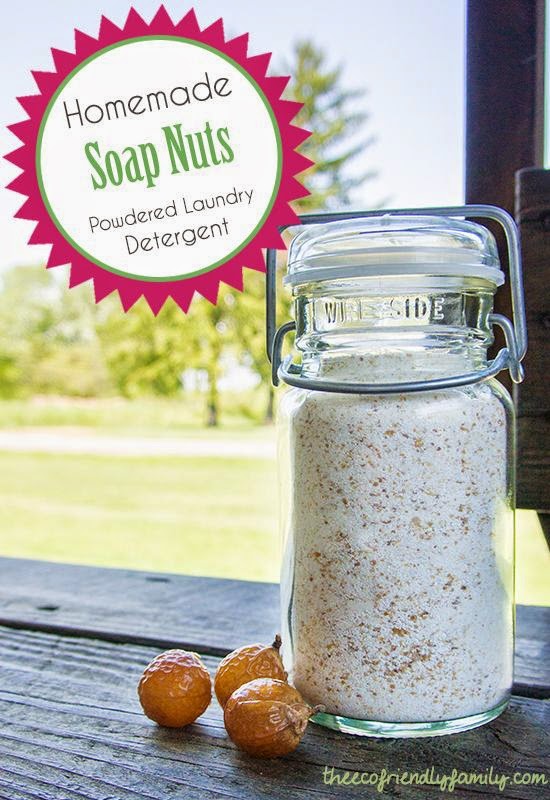
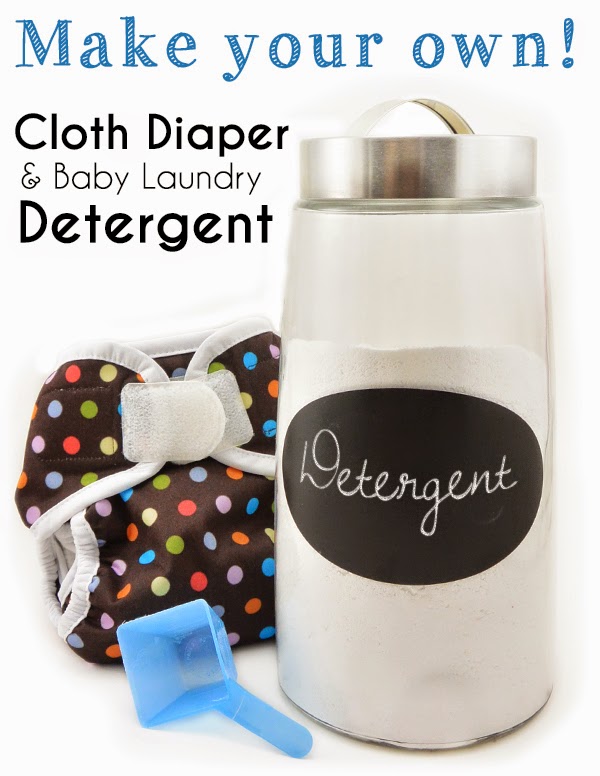
There are a lot of DIY recipes out there for cloth diaper use - many of which utilize very few ingredients and can be made easily at home.  The basic items in most of these detergents may include washing soda, borax, and baking soda.  Occasionally you'll see options that include the use of essential oils or other natural products as well.  Here are a few resources from The Eco-Friendly Family to check out and see if you'd be interested in trying your hand at DIY detergent:
http://theecofriendlyfamily.com/2013/05/diy-powdered-soap-nuts-laundry-detergent-recipe/ http://theecofriendlyfamily.com/2009/08/cloth-diaper-detergent/#_a5y_p=2872639
Images (c) The Eco-Friendly Family

Will cloth diaper detergent be expensive?

It doesn't have to be.  You can certainly buy a boutique-brand detergent from a specialty store and end up paying a fortune for your cloth diaper detergent - However, most cloth diaper detergents aren't expensive at all.  DIY detergent can cost as little as $30 for 5 gallons of powder detergent that can last up to a year.  Brands like bumGenius offer cloth diaper detergent that costs under $15.00 for a supply estimated to last for 60-70 wash cycles.  Arm & Hammer Essentials Free is below the $10.00 mark for 50fl oz. 

So... DIY or Buy?

That's up to your personal preference - I've always been attracted to the idea of DIY detergent, but Cozy Hubby isn't comfortable with it, worrying that it won't sufficiently clean what we need it to clean.  Bottom line - Do what's best for you, your baby, and your diapers!

http://topmommyblogs.com

Saturday, January 3, 2015

Cloth Diaper Stash 1.0

In gearing up for Baby Cozy #2, we've committed to cloth diapering.  We made this decision based on a few different factors.
  1. The primary factor:  COST.  Diaper Decisions has a wonderful cost breakdown which basically lays out that disposable diapers cost roughly $2600 over 2.5 years - where cloth diapers can cost as little as $400 over that same time frame, depending on which cloth diapering methods you use (and how frugal you get with your purchases).
  2. Eco-Friendly.  Have you ever stopped to think about how much waste is caused by just one baby's disposable diapers?  I don't even want to think about it... in fact, it makes me mad that I didn't get educated on cloth diapering with my first born.
  3. They're so freakin' cute!  Okay.. this isn't a very good factor to have used in my decision making, but given that I'm having a baby girl and the amount of prints and colors available in cloth diapers... I mean, come on!  They're CUTE!
Now that we've made the choice to cloth diaper, I'm aiming to make the most out of cost-savings and try out a lot of different "budget brands" while building our diaper stash - This means that if we come across a brand or style we don't like, it won't kill me to get rid of the diapers that don't work out.  Plus, a side benefit of cloth diapers is re-sale value!  If you no longer need a diaper, or your entire stash, there are ways to sell them for cost-recovery (awesome!).

Here's my first 13 diapers -we're aiming for a stash of 20+ by the time Cozy Baby #2 gets here, and I know that my parents are excited to assist with a couple diapers too, which is fabulous for our goal of cost savings.  I'll be reviewing some of these "budget brands" once the baby is here so that you can see if the savings were worth it.


Diapers 1 & 2: Nono's Baby Pocket Diapers with microfiber inserts
Cost per diaper, including insert: $7.65
Shipping: Free
Details:
1. Face fabric: 100% polyester; Sandwich: green waterproof breathable TPU elastic membrane
2. Snap closures
3. Lining: brushed cloth
4. For babies weighing 6.5-28 pounds

Diapers 3 & 4: Baby City Pocket Diapers with mircofiber inserts
Cost per diaper, including insert: $8.75
Shipping: Free
Details:
1. Outer/Cover Layer is made from New lmproved Thermoplastic Polyurethane (TPU) Laminated Fabric
2. Snap closures
3. For babies weighing 6.5-28 pounds

Diapers 5 though 10:  Kawaii Cross-Over Square Tab Snap One Size Pocket Diapers with mircofiber inserts
Cost per diaper, including insert: $8.33
Shipping: Free
Details:
1. Cross-Over Squared Tab Snap Diaper has cross-over snaps and hip snaps
2. Waterproof, breathable outer made of two layers of TPU laminated fabric and a soft inner lining of micro fleece
3. Snap closures
4. For babies weighing 8-36 pounds

Diapers 11 through 13: Kawaii Baby Organic Cotton Prefolds (x12) with Kawaii Baby One Size Leak-Free Diaper Covers (w/ Snappi Diaper Fasteners)
Cost per diaper, 4 prefolds per cover, plus the cost of Snappi closures: $21.01
Shipping: Free
Details:
1. Prefolds made from 100% Organic Cotton, twill weave, no bleaching agents were used in the growing or manufacturing. Very absorbent, resistance to pilling
2. Snappi provides safe closure for prefolds without the use of old-fashioned diaper pins.
3. Covers utilize aplix closure
4. One-size covers for babies weighing 8-36 pounds
5. Can reuse the same cover between multiple changes, switching out the prefold at each change.
6. Prefolds can also be used with other pocket diapers for additional absorbency.


TOTAL COST: $144.92 | AVERAGE PER-DIAPER COST: $11.09


http://topmommyblogs.com