Showing posts with label detergents. Show all posts

Saturday, February 7, 2015

Guide to Natural Fabrics in Cloth Diapers

Like I've said time and time again, cloth diapering is NOT easy for the newbie cloth mom to wrap her head around (or the newbie cloth dad!).  The options are ridiculously varied and it does take a lot of trial and error to find what works for you and your baby.

One of the more confusing elements of cloth diapering are the fabric options - what's best?  What's cheapest?  Can best and cheapest be the same thing?  Are all of the options healthy for your baby's skin?

Because the options are so vast, I wanted to simply start with natural fibers - these are fabrics we're all familiar with to a certain extent, and all have a lot of great functionality when used in cloth diapering.  The most common natural fibers that you'll find available are cotton, bamboo, and hemp.  While others do exist, I like to keep things simple and these three are the staples of natural fibers in cloth diapering.
 
Cotton wins the "affordable" category - and probably will be the easiest to locate as well.  Cotton prefolds and flats are extremely common, come in organic and/or unbleached options, and are super cost effective.  Organic cotton is more expensive than bleached/processed cotton, but you can get still quite a lot of "bang for your buck" even in the organic area.

Cotton is also a very absorbent fabric once you've taken the time to properly prep the material (get the scoop on cloth diaper prep here), and is also very breathable.  "Breathable" is an important factor in cloth diapers because it means that the fabric will help to pull moisture away for baby's skin and lowers the occurrence of diaper rash.

While less readily available than cotton, bamboo is a fabric with a lot of additional benefits in cloth diapering.  Bamboo is a hypoallergenic fabric that is, in most cases, MUCH more absorbent than cotton.  This means that the parents of heavy wetters LOVE bamboo... In fact, I'll go ahead and give this fabric the win in "absorbency" for natural fibers.

This fabric is also antimicrobial and antibacterial.  This means that there is a lower chance of bad odors with bamboo, and that the fabric will help to naturally limit mildew.  Given it's high absorbency, this makes bamboo ideal for keeping moisture away for your baby and limiting diaper rash or skin infections.

Hemp is often considered to the be the champion of "durability" in cloth diapering.  This fabric can last a really long time - It is also easier to find than bamboo and many of the major cloth diaper companies offer hemp inserts and fitteds.

Breathable and absorbent, hemp is also often considered more effective for heavy wetters than cotton.  In addition to that, hemp is antimicrobial, so you'll get the benefit of limited odors with this fabric as well.

A key benefit to hemp is, however, the fact that hemp in nature is not grown in a manner that requires the use of pesticides.  This means that you don't need to worry about any nasty pesticides lingering in the fabric when you purchase (still prep this fabric, though!).


Want more "Cloth Diaper 101?"  Check out these articles from The Cozy Life:

http://topmommyblogs.com

Saturday, January 17, 2015

The Importance of Cloth Diaper "Prep"

If you've looked into cloth diapering, even just a little bit, "prepping" is probably a term you've seen A LOT of.  But what does it mean and why is it so important?

What is "Prepping?"

Cloth diaper prep is, simply put, the process in which you take a brand new diaper and prepare it for use.  Depending on the type of diaper and the fabric involved, the actual process of prepping your diapers will vary.  What does NOT vary is the fact that some form of prep should take place - covers, AIO's, AI2's, pockets, fitted's, prefolds, flats, inserts, soakers, doublers, etc. should be prepped before you put them on your baby.

I'll do my best to keep things simple, so I'll just add that "prepping" a diaper for use involves WASHING that diaper, usually multiple times, prior to actually using it.  This washing process increases the absorbency of your diapers and cleanses them of any irritants left over from the manufacturing process.  So... How do you prep a cloth diaper?

Like I said, it varies.  A great deal of this variance is related to the fabric of your diapers.  If you want to keep the thought process simple, you can (with a few exceptions) say that diapers made of natural fibers are prepped differently from those made with synthetic material.

Natural Fibers

When I say "natural," I mean fabrics like hemp, bamboo, cotton, etc - These have a naturally occurring oil in the fabric when you purchase the material new.  This oil makes the fabric more water resistant, which is something you do NOT want your diaper to be.  When prepping these kinds of natural materials, you'll want to wash this oil out of the fabric through repeated washes.  The prepping process is also training the material to absorb liquid, which makes it more effective as a diaper.
Cotton and hemp are also popular materials for prefolds - this type of cloth diaper requires a lot of prep in order to get the fabric ready for use, specifically related to absorbency.  When you buy a brand new prefold, it looks like a very thin sheet of fabric - by washing your prefolds multiple times, a process called "quilting" occurs, where the fabric of the prefold begins to thicken up and increases in absorbency.

Synthetic Fibers

When you consider man-made materials used in cloth diapering - like microfiber, TPU (thermoplastic polyurethane), or PUL (polyurethane laminate) - the prepping process is less "involved" than with natural materials.  Because these are man-made materials, they do not have any "naturally occurring" oils to worry about and they are engineered to be absorbent from the get-go - these materials just need to be cleansed.
 Because these materials are man-made, however, you do need to pay attention to your method of washing these.  TPU, for example, is recommended for washing only in medium/low temperatures.  PUL, however, can be washed in high temperatures.

How many times should I wash my diapers before use?

To a certain extent, these numbers are up for debate.  Some would recommend more, others less.  However, it should be mentioned that your prefolds and fitted's will continue to gain absorbency for a little while through use - so don't give up on a diaper if it's not 100% absorbent immediately after prep.  Overnight use with a new diaper might also be tricky, so be sure to plan ahead with extra absorbency layers to accommodate.

I also recommend drying between wash cycles - many mom's will say not to bother and just use repeated washes with a dry at the very end - Again, it's up to you and what you're comfortable with. 
  • Prefolds: 4-6 washes, dry in between
  • Natural Fiber Inserts: 2-3 washes, dry in between
  • Fitted: 2-3 washes, dry in between
  • Synthetic Pockets: 1 wash
  • Synthetic AIO's and AI2's: 1 wash
  • Synthetic Inserts: 1 wash
  • Synthetic Covers: 1 wash  

How hot should the water be?  Detergent?

Generally speaking, prep should be done with hot water.  However, like I mentioned before, there are some synthetic materials that are not meant for use with super hot water, so please read manufacturer labels!  With your natural fibers, though - HOTTER IS BETTER.

As far as detergent goes, use some during your first wash cycle for cleansing purposes - after that, it's not really necessary.  Prepping for absorbency has more to do with the actual water making it's way into the fabric - not the detergent.  But, if you want detergent during all cycles, that's okay too.  Just be sure that you're using a detergent that is safe for cloth diapers.  For more information on detergents, click here to see why not all detergents were created equally!
http://amcozy.blogspot.com/2015/01/diy-or-buy-cloth-diaper-detergent.html

Can I boil my diapers?

I've never been a fan of this method, simply because it's labor-intensive and I'm ALL for easy! "Work smarter, not harder," as my mom always said!  However, there are some women that swear by this method - so we'll agree to disagree.

If you are interested in boiling, you definitely can, but only if they are 100% natural materials - like cotton and hemp prefolds or flats.  Please, please, please - do NOT boil anything with a pull, or velcro, or snaps, etc.  You run the risk of ruining the diaper AND causing a huge mess.  Once you're sure that the diaper is okay to boil, the basic process is fairly easy - When boiling, put the material on the stove for 15-30 minutes and follow this by putting diaper in the washer for one cycle before use.
http://topmommyblogs.com

Thursday, January 8, 2015

DIY or Buy? Cloth Diaper Detergent

I had a lot of questions when I first committed to cloth diapering. Among those were the issue of washing your diapers - Can I use normal detergent?  If not, what do I need to make my own?  Will it be expensive?

Can I use normal detergent?

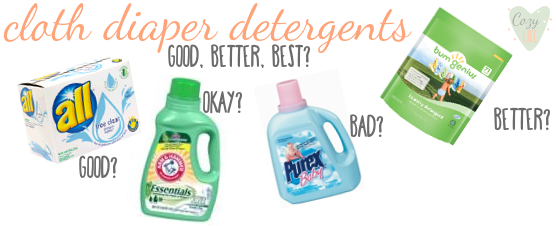
The answer to this is both yes and no.  Some readily available detergent brands offer options that are okay for cloth diaper use.  Others don't.  So what do you look for?

Avoid: Brighteners, Fabric Softeners, Dyes, Fragrances, and Enzymes
Brighteners purposefully leave behind a chemical residue in order to absorb light to make fabrics brighter, but this can cause skin irritation.  Fabric softeners are another component of detergents that, on purpose, leave behind residue - this time for making fabric feel softer.  However, fabric softeners also have the side-effect of causing fabrics to become water resistant - this can ruin the absorbancy of your diapers, effectively making them useless.  Dyes and fragrances in detergent are another potential source of skin irritation from harsh chemicals - and they are bad for the environment!  Finally enzymes, used as stain removers, can inadvertently attack your baby's skin if residue is left on your diapers due to their ability to breakdown organic materials.

Common detergents safe for use with cloth diapers
Some "free and clear" options from major detergent brands can be okay for use, though not ideal.  Many of them contain brighteners and/or fragrances, despite the "free and clear" label.  However, there are a few detergents that can work really well - like Arm & Hammer Essentials Free, which is free of dyes, phosphates, bleaches and fragrances.

What do I need to make my own cloth diaper detergent?

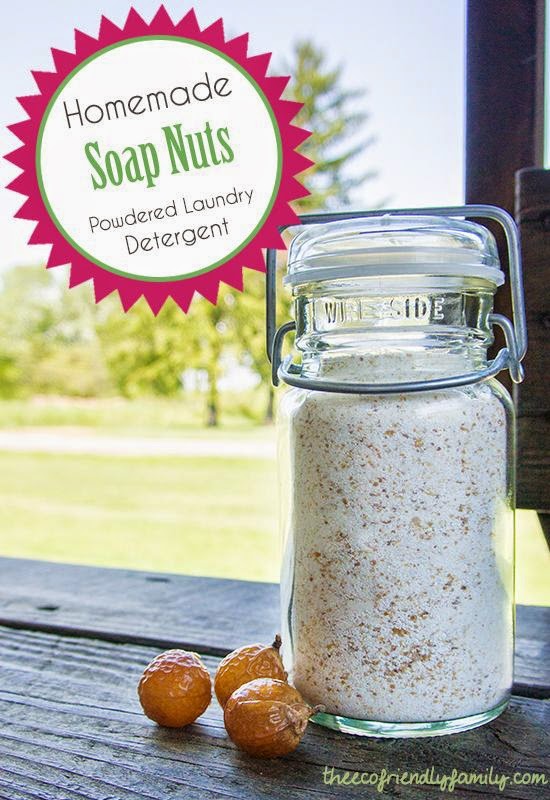
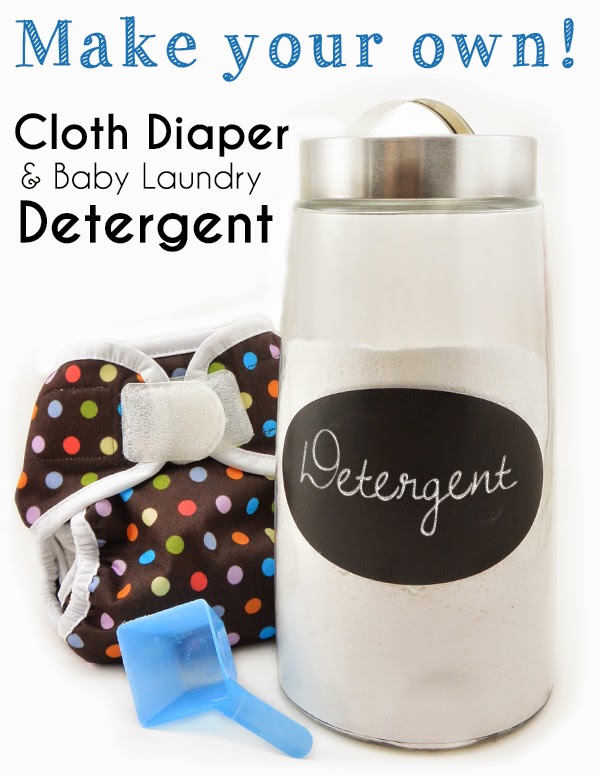
There are a lot of DIY recipes out there for cloth diaper use - many of which utilize very few ingredients and can be made easily at home.  The basic items in most of these detergents may include washing soda, borax, and baking soda.  Occasionally you'll see options that include the use of essential oils or other natural products as well.  Here are a few resources from The Eco-Friendly Family to check out and see if you'd be interested in trying your hand at DIY detergent:
http://theecofriendlyfamily.com/2013/05/diy-powdered-soap-nuts-laundry-detergent-recipe/ http://theecofriendlyfamily.com/2009/08/cloth-diaper-detergent/#_a5y_p=2872639
Images (c) The Eco-Friendly Family

Will cloth diaper detergent be expensive?

It doesn't have to be.  You can certainly buy a boutique-brand detergent from a specialty store and end up paying a fortune for your cloth diaper detergent - However, most cloth diaper detergents aren't expensive at all.  DIY detergent can cost as little as $30 for 5 gallons of powder detergent that can last up to a year.  Brands like bumGenius offer cloth diaper detergent that costs under $15.00 for a supply estimated to last for 60-70 wash cycles.  Arm & Hammer Essentials Free is below the $10.00 mark for 50fl oz. 

So... DIY or Buy?

That's up to your personal preference - I've always been attracted to the idea of DIY detergent, but Cozy Hubby isn't comfortable with it, worrying that it won't sufficiently clean what we need it to clean.  Bottom line - Do what's best for you, your baby, and your diapers!

http://topmommyblogs.com